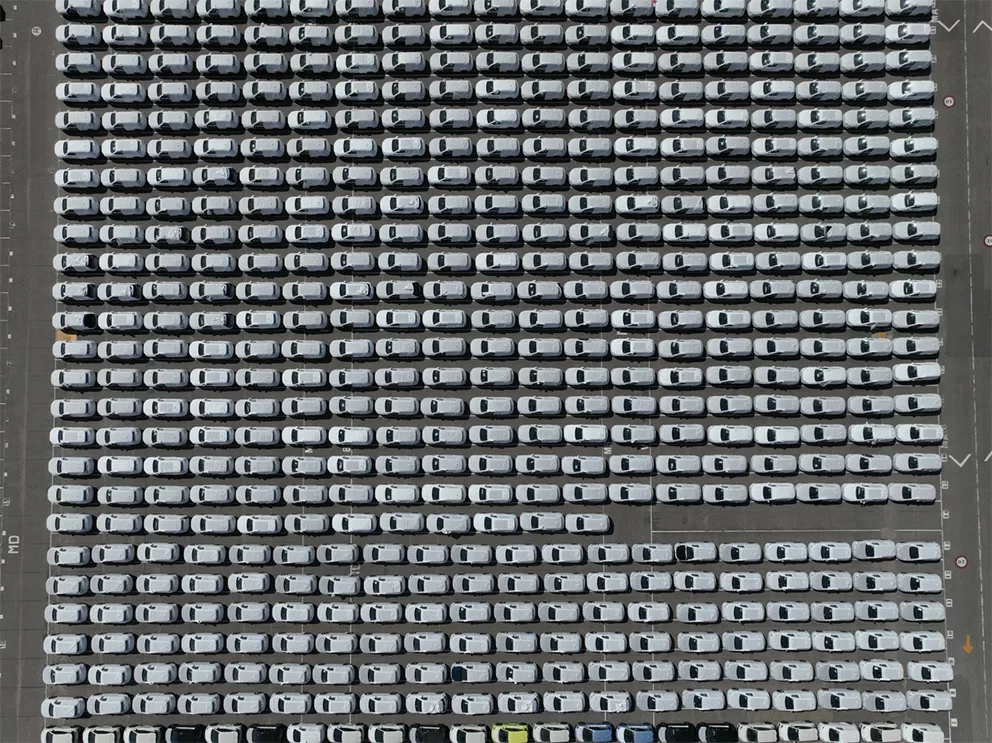
In a striking departure from its historically protectionist policies, Argentina has welcomed a massive shipment of 5,800 Chinese electric and hybrid vehicles, signaling President Javier Milei’s radical economic transformation. The BYD Changzhou cargo vessel docked at Zárate port in Buenos Aires on Tuesday after a 23-day journey from Singapore, marking a new era of trade liberalization under the libertarian leader.
President Milei, despite his admiration for Donald Trump, has implemented policies diametrically opposed to the former US president’s protectionist stance. The Argentine government has significantly reduced import restrictions, lowered trade barriers, and streamlined customs bureaucracy. This dramatic shift has resulted in a record 30% surge in imports last year, primarily through Asian online retailers.
The new regulatory framework permits up to 50,000 Chinese electric vehicles to enter Argentina duty-free this year—a remarkable change from the previous 35% import tariffs. This policy reversal represents one of the most significant economic transformations in the region, moving Argentina from one of Latin America’s most closed economies to an increasingly open market.
Claudio Damiano, an expert from the National University of San Martin, emphasizes the symbolic importance of this shipment, noting that many observers are questioning how far this new economic direction will extend. The development occurs alongside pending free trade agreements between the EU and Mercosur, which would facilitate European industrial products’ access to South American markets. However, Damiano suggests European manufacturers cannot compete with Chinese pricing structures.
Local automotive manufacturers and opposition figures have raised concerns about unfair competition from Chinese EVs. The Premier of Ontario province warned that the Canadian auto market could face significant pressure from this influx.
Pablo Naya of Sero Electric, Argentina’s sole manufacturer of electric microcars, highlights infrastructure challenges: the country’s outdated energy grid remains unprepared for massive EV adoption, and dedicated service centers for maintaining Chinese vehicles are currently lacking.
Despite these concerns, Naya acknowledges that domestic industry faces limited immediate threat but recognizes that future growth of Chinese EV imports could challenge local manufacturers as infrastructure and consumer demand develop.
This strategic move positions Argentina toward a more open and dynamic economy, distancing itself from historical protectionist policies and reestablishing its role in global trade networks.