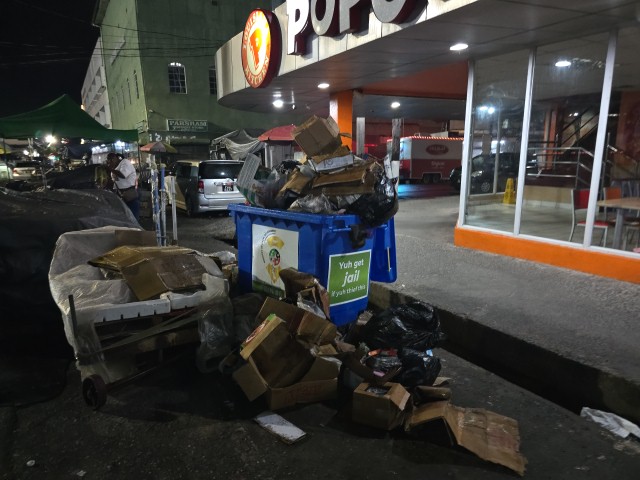
The Georgetown Mayor and City Council has officially declared a limited state of emergency regarding solid waste management in Guyana’s capital, marking a critical turning point in the city’s ongoing sanitation crisis. The emergency declaration, passed during a statutory council meeting on Monday, January 19, 2026, enables the immediate reassignment of non-essential municipal staff to sanitation duties and initiates the development of a comprehensive strategy seeking financial and operational support from central government.
Mayor Alfred Mentore outlined an ambitious multi-pronged approach that includes rapid deployment of additional equipment, short-term hiring of garbage collection contractors, and identification of illegal dumping hotspots. The administration plans enhanced enforcement measures against litterbugs and establishment of temporary garbage drop-off sites across commercial districts, markets, hospitals, schools, and densely populated residential areas.
The emergency declaration emerged against a backdrop of political tensions, with only 13 of 30 councilors attending the critical meeting—10 from A Partnership for National Unity (APNU) and three from the People’s Progressive Party Civic (PPPC). Earlier that day, APNU councilors had boycotted a separate meeting called by Local Government Minister Priya Manickchand, who has repeatedly expressed skepticism about the mayor’s motives since her appointment following September 2025 elections.
Despite these tensions, Mayor Mentore emphasized willingness to ‘throw politics through the window’ and collaborate with the PPPC-led central government. He envisioned the Georgetown cleanup initiative serving as a pilot model for other locally governed areas in Guyana, requiring ‘hand-in-glove arrangement between the city and the government.’
Chief Sanitation Officer Walter Narine highlighted alarming statistics showing a 16% increase in garbage production over five years, now reaching 184 tonnes daily. He attributed this surge to growing migrant populations and proliferation of supermarkets, noting garbage trucks now must make three trips per constituency instead of one. Narine warned that ‘the current system can’t continue’ without structural changes.
The council supported Narine’s proposal to hire small contractors with prompt payment through a petty-cash system, addressing previous contractor unwillingness to work due to payment delays. Meanwhile, concerns were raised about holding larger garbage collection companies accountable for their performance lapses.
The resolution represents a significant municipal response to what Councilor Clayton Hinds described as a waste disposal crisis affecting specific areas of Georgetown, though he characterized the emergency as affecting only ‘a small area’ of the city.