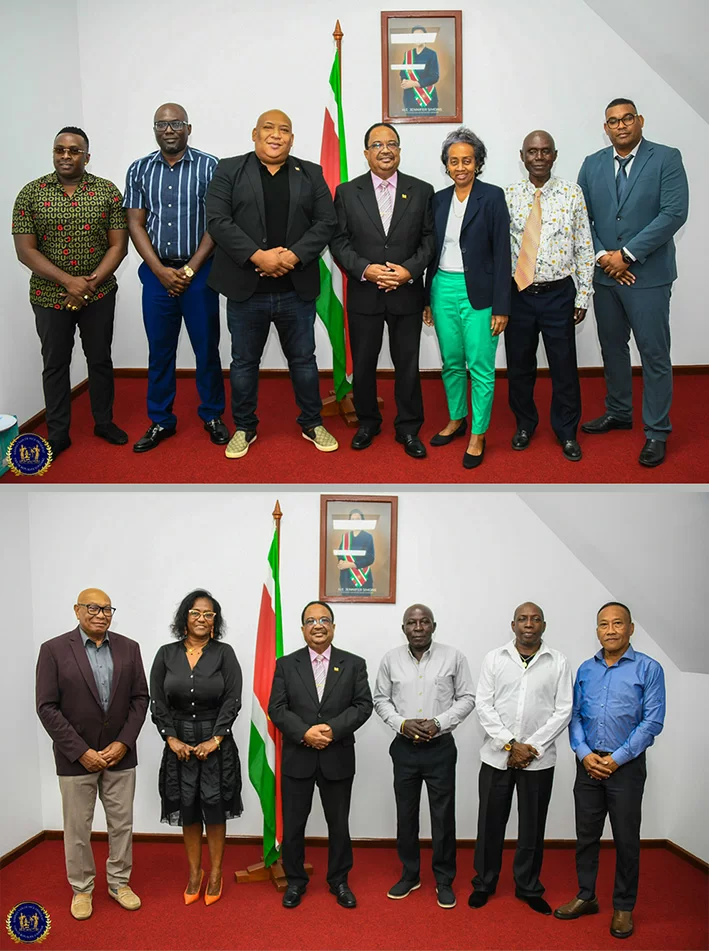
Suriname has undertaken significant reforms in its public broadcasting sector with the installation of new supervisory boards for both Radio Suriname Foundation (SRS) and Suriname Television Foundation (STVS). Vice President Gregory Rusland presided over the installations, emphasizing the critical role these oversight bodies will play in strengthening the nation’s media landscape.
During the installation ceremonies, Vice President Rusland confirmed that his office maintains direct administrative and financial responsibility for both broadcast entities. He committed to advocating for enhanced budgetary allocations for STVS during upcoming budget deliberations, recognizing the financial challenges facing the state broadcaster.
The newly constituted SRS board, chaired by Kenneth Moerlie, faces the formidable challenge of restoring the broadcaster’s former prominence. Rusland urged the council to develop innovative strategies to improve competitive positioning while fulfilling public service mandates. SRS Director Earnie Eenig highlighted the board’s crucial role in upcoming challenges, particularly regarding coverage of the forthcoming World Cup football tournament. “It would be peculiar for Suriname to participate in the World Cup while we fail to broadcast it,” Eenig remarked.
The complete SRS supervisory board comprises Moerlie alongside Roberto Banel, Raoul Swedo, Harvey Liefde, Estacio Nasa, Audrey Tjung Angie, and Newton Ali.
At STVS, the new board chaired by Shirley Lackin will prioritize financial stabilization of the state television network. Board member Glenn Truideman raised concerns about personnel management complexities arising from varying administrative authorities, which occasionally create operational friction.
Vice President Rusland proposed implementing project-based working arrangements to provide clearer contract duration frameworks. The STVS board includes Lackin, Truideman, Stanley Sidoel, Kenrich Cairo, and Michel Felisi. STVS Director Raoul Abisoina expressed appreciation for the government’s cooperative relationship and anticipated productive collaboration with the new oversight body.