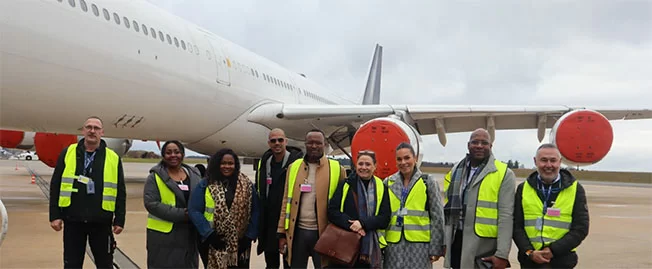
In a strategic shift toward integrated aviation and tourism development, Suriname’s Presidential Task Forces for Tourism and Aviation conducted an operational visit to Frankfurt’s Hahn Airport to finalize plans for the comprehensive renewal of Surinam Airways (SLM). The move signals a fundamental policy redirection that transcends technical aviation considerations to embrace tourism development, passenger experience, and market positioning.
According to Faizel Baarn, Presidential Advisor for Aviation and Maritime Affairs, this initiative marks a clear departure from past approaches that prioritized operational and technical aspects. The renewed strategy positions airlift to Suriname within a broader tourism framework, anticipating growing demand for a reliable, attractive, and distinctive aviation product.
Central to the transformation is SLM’s adoption of a four-class cabin configuration—featuring First Class, Business Class, Premium Economy, and Economy—for its future aircraft. This structure aims to enhance comfort and choice for diverse traveler segments while appealing particularly to tourists and premium passengers willing to invest in superior service quality. The concept introduces the “Suriname experience” aboard flights departing from Europe.
Beyond passenger comforts, the evaluated aircraft offers substantial cargo capabilities, combining passenger transport with a 30-ton freight capacity—including refrigerated facilities for perishable goods. This dual functionality is expected to strengthen Suriname’s logistics infrastructure and support economic diversification and export growth.
The Hahn Airport visit follows prior negotiations with Schiphol Slot Management and other aviation partners, focusing on improving SLM’s punctuality—a critical factor in retaining and expanding slots at Amsterdam Schiphol. Concurrent efforts are underway to enhance overall service quality, essential for reclaiming market share in a competitive landscape dominated by carriers like KLM.
Strategic planning targets two key periods for potential slot expansion: July to mid-September, coinciding with peak tourism and Heritage Month, and late November to mid-January, a traditional high season for tourism and diaspora travel. These intervals are prioritized to position Suriname more prominently and consistently in key travel markets.
The task forces emphasize a holistic approach interlinking aviation, tourism, and product quality. Through forward planning and deliberate choices, Suriname aims to sustainably enhance its air connectivity and develop a more appealing travel proposition for future passengers.