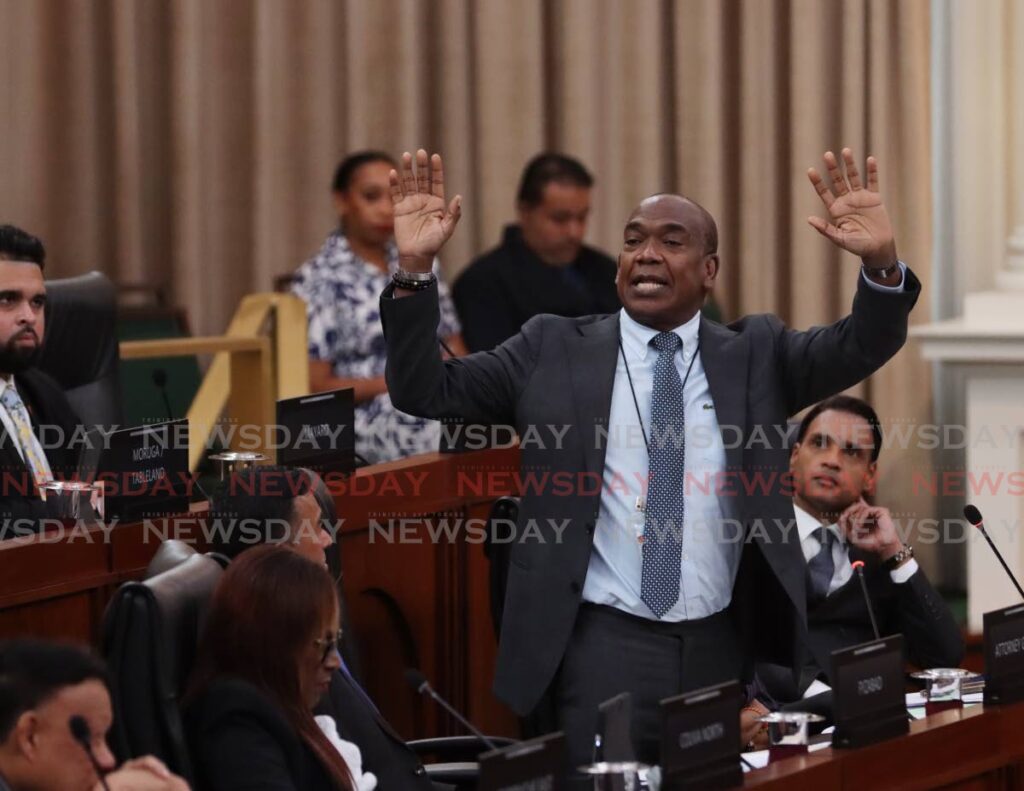
In a dramatic parliamentary address on January 16, Attorney General John Jeremie revealed the staggering financial aftermath of the CL Financial collapse, announcing his decision to terminate all civil proceedings related to the case. The revelation came as Jeremie presented the long-suppressed Sir Anthony Colman report detailing the failure of the financial conglomerate and its subsidiaries.
Jeremie disclosed that between $3 billion to $4 billion had been expended on legal fees alone since the corporation’s collapse 17 years ago, with virtually nothing to show for this massive expenditure. The Attorney General characterized the investigation as fundamentally inadequate, noting that only three police officers had been assigned to what he described as “the largest financial fraud in this country’s history.”
“This is a joke of an investigation,” Jeremie declared before the House of Representatives. “What do I do? Well, as guardian of the public interest and having consulted with the Honourable Prime Minister, I have to say that we are not able to continue to spend hard resources, government resources.”
The Attorney General expressed particular frustration with the pattern of payments to legal professionals, noting that nearly $400 million had been paid to accounting firm Deloitte and Touche alone—despite his office never having engaged their services. He pointedly observed that these funds primarily benefited “persons who are sometimes golfers but who are always very wealthy,” while ordinary citizens received no tangible benefits.
Jeremie traced the origins of the crisis to “unconscionable action” by previous administrations, noting that the initial government bailout had consumed $28 billion, with the additional billions in legal fees representing further financial hemorrhage. The Colman report itself cost approximately $150 million to produce yet had “never seen the light of day” until its presentation to Parliament.
The comprehensive report contains extensive evidence including tens of millions of emails, financial records, forensic analyses of complex cross-border transactions, 6,414 pieces of electronic evidence, and 1,650 boxes of hard-copy documentation. Despite this voluminous evidence and explicit recommendations to involve law enforcement, not a single individual has faced criminal charges related to the collapse.
Jeremie’s decision to discontinue civil action represents a pragmatic approach to limiting further financial losses, though he acknowledged the state might need to pay “reasonable costs” to formally exit these proceedings.