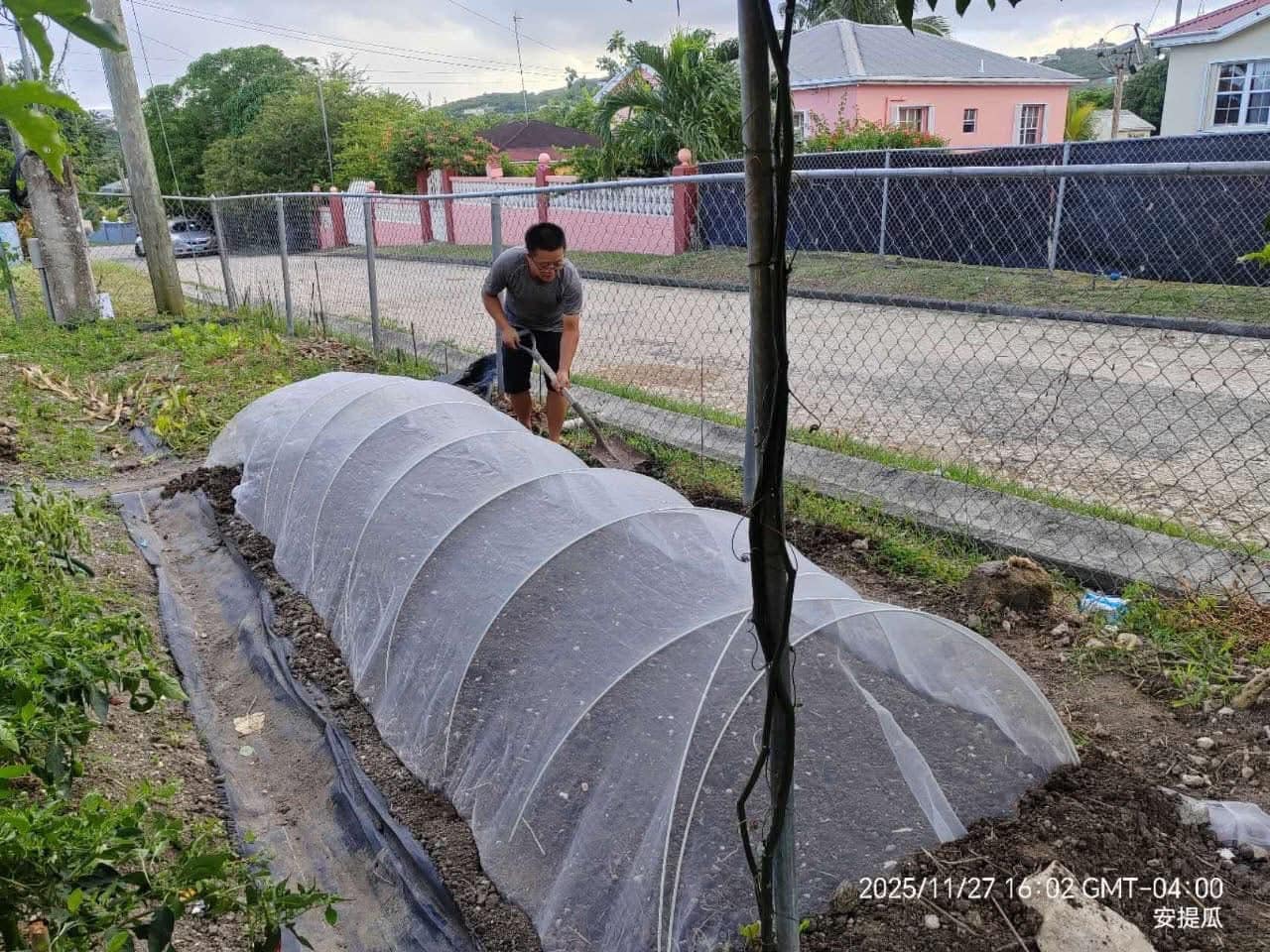
A groundbreaking agricultural initiative in Antigua and Barbuda is demonstrating remarkable success in pesticide-free vegetable cultivation through advanced insect-proof net technology. This innovative approach, developed under a bilateral cooperation program with China, represents a significant leap toward sustainable farming practices in the Caribbean nation.
The technology, formally designated as Light and Simplified Green Prevention and Control Technology for Plant Pests, employs finely woven nets that create a physical barrier against destructive insects while permitting essential sunlight, air, and rainwater to reach crops. This method effectively prevents infestation by common pests including aphids, thrips, flea beetles, and diamondback moths without chemical intervention.
Dr. Lu Jiaju, Associate Researcher at the Institute of Subtropical Crops, Guizhou Academy of Agricultural Sciences, who serves as lead technical instructor for the project, emphasized the preventive nature of the technology. “This methodology focuses on creating an impenetrable barrier rather than combating pests after infestation occurs,” Dr. Lu explained. “By preventing insect access, we eliminate both crop damage and disease transmission pathways.”
The comprehensive field trial, conducted in collaboration with Antigua and Barbuda’s Crop Research & Development Division, focused on Chinese cabbage—a leafy vegetable particularly vulnerable to tropical pests. Researchers implemented meticulous preparation protocols including field sanitation and solarization techniques to eliminate existing pest populations before establishing arched greenhouse structures completely enclosed with the specialized netting.
The results proved unequivocal: the January 2026 harvest revealed stark contrasts between net-protected and control plots. Cabbage grown under insect-proof nets exhibited perfect health, uniformity, and zero pest damage without pesticide application, while unprotected crops suffered near-total destruction.
Beyond pest prevention, the technology enhances vegetable quality by eliminating plant stress responses that typically produce bitter compounds. This results in superior taste, texture, and visual appeal that meets growing consumer demand for clean, chemical-free produce.
While initially demonstrated with cabbage, the technology shows promising applications for diverse crops including tomatoes, cucumbers, eggplants, watermelons, broccoli, napa cabbage, and cowpeas—all staples of local agriculture. The Ministry of Agriculture plans expanded trials and demonstrations, including at the Bethesda agricultural base, to encourage broader adoption.
The subsequent phase of the agricultural assistance project will include comprehensive farmer training programs and hands-on demonstrations. Although initial infrastructure costs exceed traditional open-field farming, experts project rapid cost recovery through reduced pesticide expenses and premium market prices for higher-quality produce.
“This represents a transformative investment in our agricultural future,” Dr. Lu concluded. “Through continued collaboration with the Ministry of Agriculture, we can empower local farmers to produce healthier vegetables while significantly enhancing national food security.”