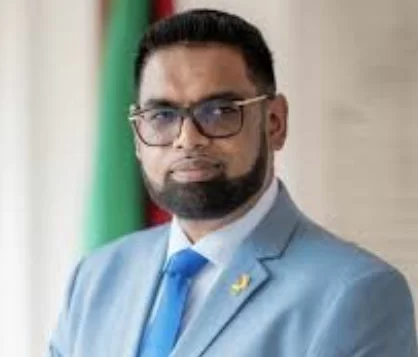
President Irfaan Ali of Guyana has emphatically declared that his nation will not enter into any diplomatic agreements with the United States or other countries to amicably resolve its longstanding border dispute with Venezuela. The statement, delivered on Saturday during a press briefing following the inauguration of the AC Marriott Hotel near Eugene F. Correia International Airport, underscores Guyana’s unwavering position on territorial sovereignty.
“My paramount commitment remains ensuring the security of the Guyanese people and safeguarding our borders, territorial integrity, and sovereignty,” President Ali asserted. “These fundamental principles are non-negotiable and will never be compromised.”
The declaration comes amid growing international speculation that the Trump administration might pressure both nations toward a diplomatic resolution, partially motivated by potential access to oil and gas reserves in the contested Essequibo region. While no formal request has been made by the U.S. government, analysts suggest behind-the-scenes diplomatic maneuvers could be underway.
Guyana maintains confidence in its legal position before the International Court of Justice, where the validity of the 1899 Arbitral Award forms the cornerstone of its case. Venezuela continues to claim sovereignty over the approximately 160,000-square-kilometer Essequibo territory and adjacent maritime zones, believed to contain substantial petroleum resources.
President Ali also addressed broader regional security concerns, warning that recent geopolitical developments—including U.S. actions against Venezuelan leadership—could significantly alter the security and democratic landscape throughout Latin America. He emphasized that Guyana must remain vigilant against international criminal networks that exploit geopolitical instability.
The president highlighted Guyana’s significant achievement in reducing serious crime by 25.5% in 2025—reaching the lowest level in a decade—attributing this success to technological innovations in law enforcement and enhanced community cooperation programs.