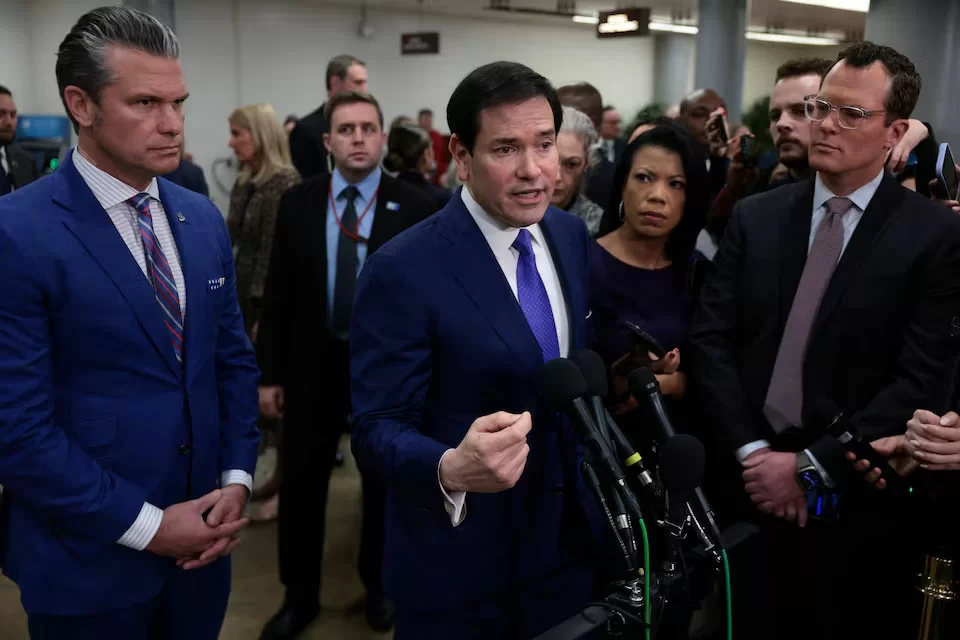
The United States has formally articulated a comprehensive three-phase strategy for Venezuela focused on stabilization, economic recovery, and political transition, according to Secretary of State Marco Rubio. This development follows Saturday’s controversial capture of Venezuelan leader Nicolás Maduro by American forces.
The blueprint commences with establishing stability through interim authorities collaborating closely with Washington. Subsequently, American oil corporations will receive guaranteed access during the reconstruction phase, ultimately transitioning to a democratically elected government chosen by the Venezuelan people.
President Donald Trump issued stern warnings of potential additional military interventions should emerging leadership figures from Maduro’s circle resist American demands, which predominantly center on securing Venezuelan oil resources. The administration aims to refine and market up to 50 million barrels of Venezuelan crude, with US forces continuing seizure operations against oil tankers linked to Venezuela.
Secretary Rubio emphasized Washington’s substantial control over the interim government, asserting that oil revenue would be meticulously managed through US-controlled accounts to prevent corruption and benefit Venezuelan citizens.
The initiative has encountered sharp bipartisan criticism. Democrats have condemned the approach as ‘oil kidnapping’ and denounced the lack of transparency. Former House Speaker Nancy Pelosi questioned the absence of public hearings regarding operational costs and motivations, while Senator Chris Murphy characterized the plan as ‘insane’ and condemned it as a violent oil seizure scheme.
Republican dissent emerged concurrently, with Representative Don Bacon stressing the necessity of installing legitimately elected leadership and cautioning that excessive focus on oil could undermine broader American objectives.
Energy Secretary Chris Wright highlighted the critical importance of controlling Venezuela’s oil market to stabilize the economy and rebuild the energy sector. The strategy involves initially marketing stored oil reserves followed by future production sales, with revenues administered through American-supervised accounts. Wright confirmed ongoing discussions with US oil companies regarding their participation in Venezuela’s long-term production restoration.
Venezuela possesses the world’s largest oil reserves yet suffers from chronically low production due to prolonged mismanagement and investment deficits. Wright anticipates short-term production increases through advanced technology and equipment, though full recovery to historical production levels would require years.
Washington recently announced a $2 billion crude oil export agreement with Caracas, interpreted as Venezuelan officials acquiescing to Trump’s demands under threat of further military action. American refining companies responded favorably, with stock appreciations observed in major corporations including Marathon Petroleum, Phillips 66, and Valero Energy.
The White House has scheduled a Friday meeting with executives from ExxonMobil, ConocoPhillips, and Chevron regarding their anticipated involvement in the reconstruction process, though these corporations remain reticent in public statements.
The US proposal has elicited mixed global reactions, raising concerns about sovereignty violations, economic interests, and Venezuela’s future trajectory. Coming developments will prove decisive for both Venezuela’s stability and international stakeholders’ regional influence.