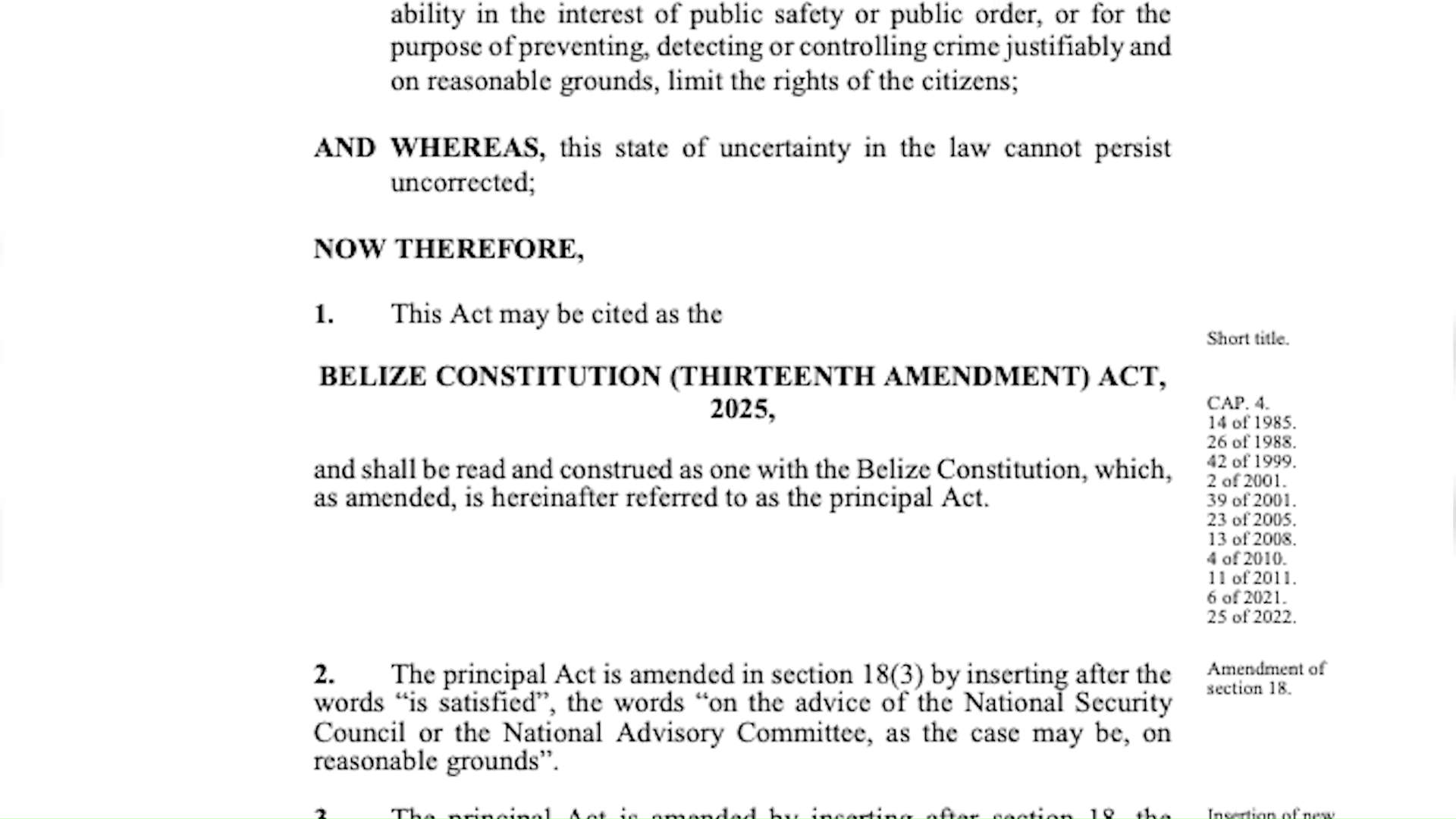
In a significant policy reversal, the Belizean government has officially withdrawn its proposed Thirteenth Amendment to the constitution following substantial public opposition. The controversial legislation, which had sparked nationwide debate, faced mounting criticism from civil society organizations and citizens who argued the measures would undermine civil liberties while failing to address fundamental crime prevention strategies.
The National Trade Union Congress of Belize (NTUCB) emerged as a leading voice against the amendment, consistently warning that the proposed changes would disproportionately impact ordinary citizens rather than enhance community safety. NTUCB President Ella Waight confirmed the government’s decision, revealing that Prime Minister John Briceño has committed to pursuing alternative legislative approaches through modifications to the criminal code instead of constitutional amendments.
According to Waight, the revised approach will require any state of emergency (SOE) declarations to receive approval through the National Security Council, creating a more inclusive and progressive framework for addressing security concerns. This procedural change aims to prevent ordinary citizens from becoming inadvertently entangled in security operations while conducting their daily activities.
The government’s retreat represents a notable victory for civic engagement in Belize, demonstrating how sustained public pressure can influence policymaking at the highest levels. The development underscores the continuing tension between security measures and civil liberties in addressing crime-related challenges across the nation.