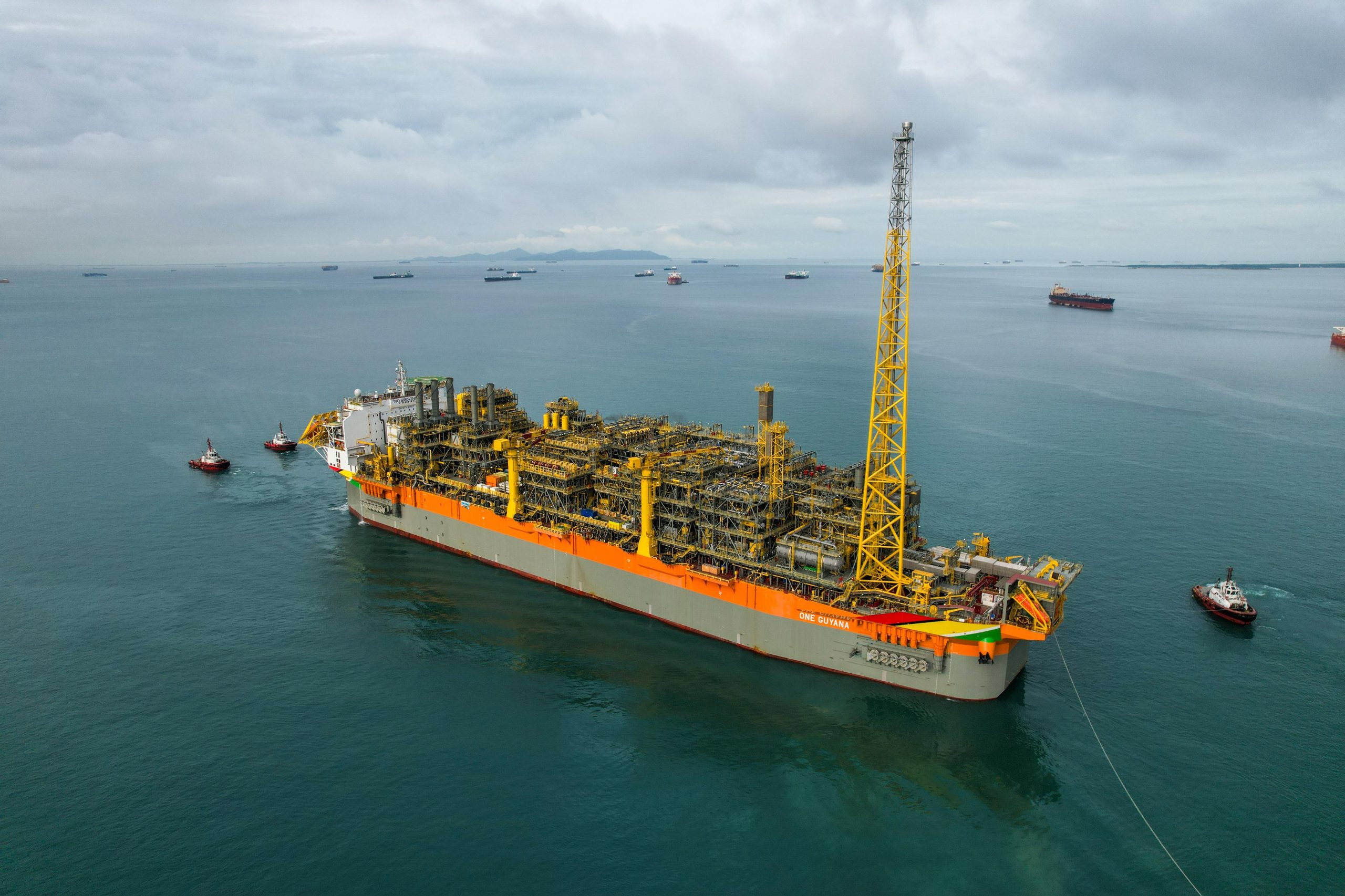
Amidst global oil price fluctuations, Guyana’s burgeoning petroleum sector demonstrates resilience against potential market pressures from US marketing of Venezuelan crude. Business analyst Christopher Ram asserts that while increased Venezuelan oil supplies could drive prices down to the early $50s range—representing a 12-15% decline—Guyana’s simultaneous production scaling will counteract revenue impacts through volume increases.
ExxonMobil’s current Stabroek Block operations yield approximately 900,000 barrels daily from Liza 1, Liza 2, and Payara developments. The consortium, including China National Overseas Oil Corporation and Chevron, anticipates reaching 1.7 million barrels per day by 2029 as additional projects (Uaru, Whiptail, Longtail, and Hammerhead) commence operations. Ram emphasizes that Venezuela’s heavy crude presents no direct competitive threat to Guyana’s premium light sweet oil due to fundamental quality differences.
The market context reveals significant oversupply concerns, with Brent crude closing at $59.96 per barrel on January 7, 2026—well below Guyana’s projected $71.90 average for the previous year. Actual 2025 prices averaged $69.00 annually, declining from January’s $79 peak to December’s $63 low—the weakest monthly performance since early 2021.
Meanwhile, civil society activists including Ram and Vanda Radzik staged symbolic protests near the US Embassy in Kingston, condemning the military capture of Venezuelan President Nicolás Maduro and First Lady Cilia Flores. The demonstration, constrained by police barriers, featured accusations of US oil-motivated interventionism and demands for evidence regarding narco-terrorism charges against Maduro. Radzik characterized the operation as undermining Caribbean peace initiatives and regional sovereignty.
International relations expert Professor Mark Kirton warns that Venezuelan production resurgence could introduce competitive pressures within an already saturated market, potentially affecting Guyana’s revenue streams. However, energy analysts note that substantial investment in Venezuela’s deteriorated infrastructure remains prerequisite to significant output restoration, creating natural market buffers for Guyana’s continued development.