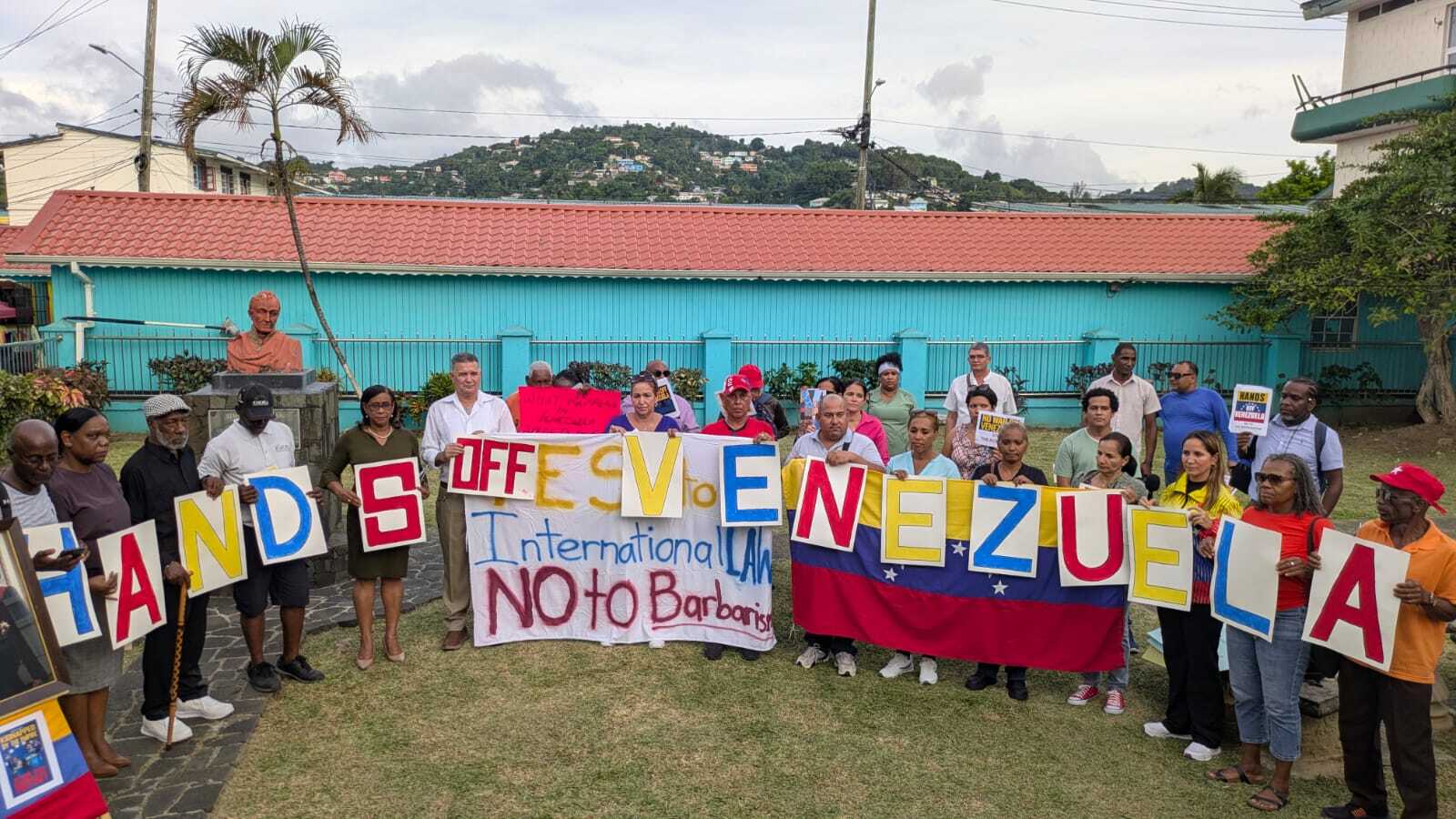
A significant demonstration of regional solidarity unfolded in Castries, Saint Lucia, as citizens gathered at Bideau Park to voice staunch support for Venezuela amidst escalating geopolitical tensions. The rally, orchestrated by the interim Saint Lucia/Venezuela Association, served as a powerful rebuke against recent United States military operations targeting Venezuelan territories.
The carefully chosen venue held profound historical symbolism, featuring busts of Venezuelan liberator Simón Bolívar and Saint Lucian freedom advocate Jean Baptiste Bideau, whose heroic rescue of Bolívar from drowning centuries ago mirrored the contemporary theme of regional protection.
Venezuelan Ambassador Leiff Escalona expressed profound gratitude for the overwhelming support from Saint Lucian citizens and diplomatic counterparts, particularly noting the presence of Cuban embassy officials. “From the initial reports of US aerial bombardments targeting four Venezuelan cities, my office received numerous calls from concerned Saint Lucians,” Ambassador Escalona revealed. “This public display of solidarity confirms our shared commitment to peace.”
Trevor Heath, representing the organizing association, characterized US military maneuvers as “barbaric acts of aggression” that threaten the entire Caribbean basin. Reading from an official statement, Heath condemned “the Trump administration’s blatant attempt to orchestrate regime change against democratically elected President Nicolás Maduro” and denounced the “calculated seizure of Venezuela’s oil resources for American corporate interests.”
Cuban Ambassador Yenielys Linares amplified these concerns, labeling the January 3rd incidents as “illegal and irrational acts of aggression.” She revealed disturbing repercussions already affecting Caribbean students in Cuba, with one Saint Lucian scholar expressing fear about returning to studies amid regional instability. “Who granted Trump authority to designate which nation follows Venezuela as the next target?” Ambassador Linares posed to the assembled crowd.
Veteran journalist Earl Bousquet provided crucial historical context, documenting 70 US military interventions in Latin America and the Caribbean between 1947-1983. “The pattern demonstrates alarming consistency—from Grenada in 1983 to Panama in 1989, Haiti in 2004, and now Venezuela in 2026,” Bousquet cautioned. He highlighted the recent reformulation of the Monroe Doctrine into the “Donroe Doctrine” as explicit confirmation of American expansionist intentions.
Bousquet, dressed in black to memorialize 32 Cuban and 80 Venezuelan casualties from the recent attacks, emphasized that meaningful solidarity requires tangible sacrifice. “The United States demonstrates willingness to spill blood for oil, particularly as Venezuela redirects 68% of its petroleum exports to China, diminishing US energy leverage,” he analyzed.
The protest concluded with unified demands for President Maduro’s safe return, complete military withdrawal from the region, and immediate resumption of diplomatic negotiations. The collective message resonated clearly: the Caribbean remains determined to preserve its status as a zone of peace against foreign intervention.