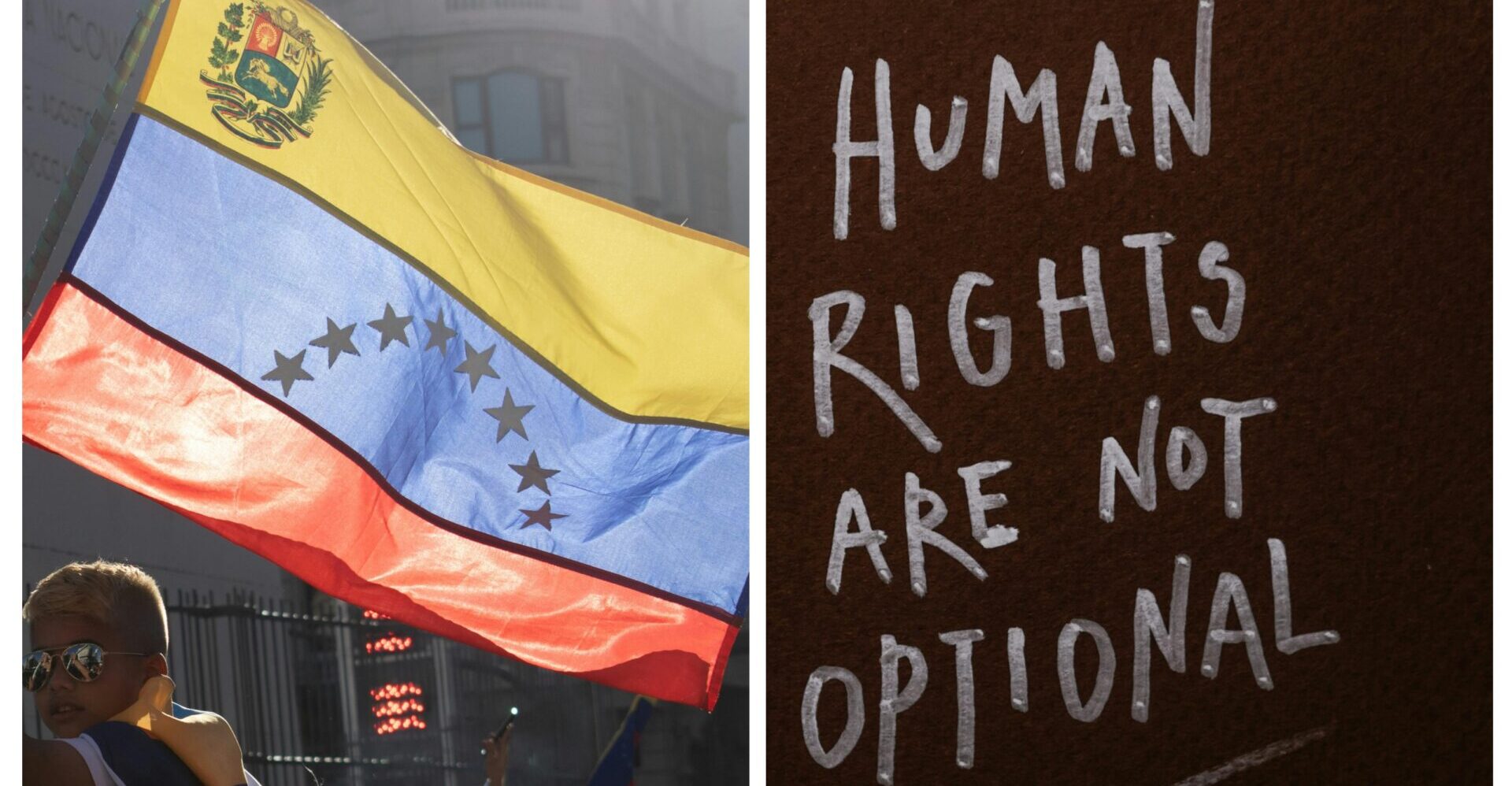
Human Rights Watch has issued a stark warning that the Trump administration’s aggressive military operations in Venezuela risk precipitating a severe human rights emergency. The alert follows January 3rd operations that resulted in the capture of Venezuelan leader Nicolás Maduro and his wife Cilia Flores, who now face US federal court charges spanning drug trafficking and related criminal allegations.
Juanita Goebertus, Human Rights Watch’s Americas director, condemned Washington’s approach, stating: “While Venezuelans possess the fundamental right to self-determination, the United States appears to be instrumentalizing Venezuela’s oppressive infrastructure to advance its own geopolitical and economic agendas.”
The escalation began when President Trump declared the US would effectively “run” Venezuela indefinitely without specifying operational parameters. US officials have since indicated cooperation with Delcy Rodríguez, formerly Maduro’s vice president and recently installed as interim president on January 5.
According to HRW documentation, American strategy involves manipulating oil embargo mechanisms in the Caribbean region combined with threats of additional military action to compel Venezuelan compliance with US demands. These include privileged access for American energy corporations and suppression of gang violence.
The January 3rd strikes reportedly targeted military facilities, killing dozens of personnel including at least two civilians. The Cuban government—a historical ally of Venezuela—confirmed 32 Cuban officers among the casualties and strongly denounced the attacks.
This intervention follows earlier extrajudicial US operations in Caribbean and Pacific waters that eliminated至少115 individuals accused of narcotics trafficking. Secretary of State Marco Rubio subsequently outlined demands for Venezuelan cooperation on oil investments, criminal group suppression, and severed ties with Iran and Hezbollah. President Trump reinforced these demands with threats of “a second strike” if Venezuela fails to “behave.”
Despite Trump’s reference to overseeing a “judicious transition,” HRW observers note absent clarification regarding electoral processes, political prisoner releases, or human rights reforms. This ambiguity persists despite Venezuela’s July 2024 elections where independent analysts reported opposition candidate Edmundo González winning majority support, though official results declared Maduro victorious.
The post-electoral period witnessed intensified repression including protestor fatalities, arbitrary detentions, and enforced disappearances targeting opposition figures, activists, and foreign nationals. Currently, over 860 political prisoners remain incarcerated according to legal aid organization Foro Penal, with the ICC Prosecutor’s Office investigating crimes against humanity allegations dating to 2014.
Venezuela’s decade-long humanitarian crisis continues featuring critical shortages of food and medicine, prompting approximately 7 million citizens to flee while 14.2 million require urgent humanitarian assistance. Human Rights Watch urges global leaders—including Latin American, European, and Canadian counterparts—to advocate for democratic transition, prisoner releases, and accountability for human rights violations. The organization specifically calls upon the US to uphold its obligations under international human rights and humanitarian law.
Goebertus emphasized: “The international community must prioritize protecting Venezuelans who have endured a decade of suffering under Maduro. Trump’s decapitation strike has merely exposed them to further systemic abuse.”