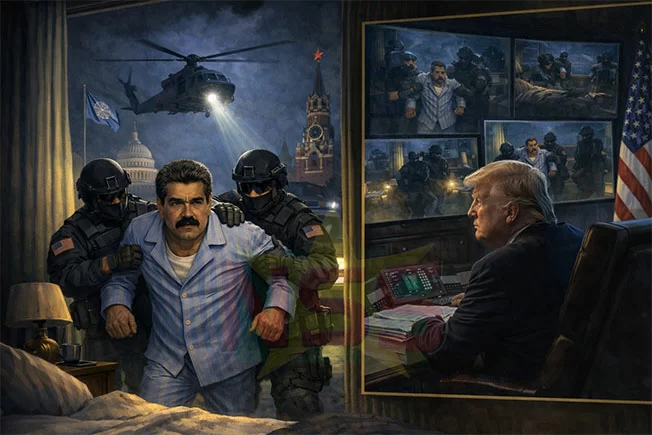
The recent detention of Venezuelan President Nicolás Maduro and his wife by United States authorities has ignited a profound debate about sovereignty, power politics, and the erosion of international legal norms. While Washington justifies the action as part of anti-narcotics operations, the incident represents a dangerous precedent in international relations.
Maduro, despite controversies surrounding his administration, remains the democratically elected leader of a sovereign nation. International law explicitly protects sitting heads of state from foreign arrest and prosecution, establishing clear protocols through treaties, diplomatic channels, and international courts for addressing allegations against foreign leaders. The unilateral action bypasses these established mechanisms, substituting legal process with power-based intervention.
The global response has been notably muted, revealing a troubling hypocrisy in the international community’s application of principles. Many nations that rightly condemned Russia’s invasion of Ukraine now demonstrate selective outrage when the United States violates international norms. This double standard undermines the very foundation of global governance.
The United Nations Security Council remains paralyzed, particularly when a veto-wielding permanent member is directly involved in such actions. This institutional impotence exposes the fundamental flaw in the international system: rules only bind those without power to ignore them.
Historical patterns suggest economic motivations behind the intervention, with Venezuela’s vast oil reserves and strategic location likely influencing the calculus. This echoes previous US military interventions in Iraq, Afghanistan, and Libya, which consistently produced chaos rather than democracy or stability.
The silence of neighboring countries, including Suriname and CARICOM nations, carries significant implications. While caution is understandable, failure to defend sovereignty principles ultimately legitimizes their violation. Smaller nations particularly depend on a rules-based international order where might doesn’t automatically equal right.
The operation reportedly resulted in casualties, though details remain scarce—another characteristic of interventions where accountability often follows action rather than preceding it.
This situation transcends Venezuela or Maduro personally. It represents a critical test for whether international law maintains meaningful authority or merely serves as convenient rhetoric when aligned with powerful interests. The normalization of arbitrary power today establishes dangerous precedents that could affect any nation tomorrow.