In a dramatic courtroom appearance at Manhattan Federal Court, deposed Venezuelan leader Nicolás Maduro defiantly proclaimed his innocence against serious U.S. charges of narco-terrorism and weapons possession. The proceeding marked an unprecedented legal confrontation between the United States and a former head of state accused of orchestrating international drug trafficking operations.
Maduro, dressed in a striking blue and bright orange shirt with hands shackled, delivered an impassioned declaration in Spanish asserting his legitimate presidential status and characterizing his detention as an unlawful kidnapping. Throughout the brief but symbolically charged hearing, the ousted leader maintained detailed notes and engaged directly with the court proceedings despite judicial attempts to limit political commentary.
The session witnessed several tense moments, including when Maduro addressed the packed courtroom instead of simply confirming his identity as requested. “I am the president of Venezuela who has been kidnapped,” he stated calmly. “I was captured in my home in Caracas.” The presiding judge intervened, reminding Maduro that there would be more appropriate times and venues for such political statements.
Emotional intensity peaked when a spectator launched accusations against Maduro, prompting his self-identification as both “kidnapped president” and “prisoner of war” before court security removed the protester. Meanwhile, defense attorneys for Maduro’s wife, Cilia Flores, indicated she showed signs of possible mistreatment during her arrest.
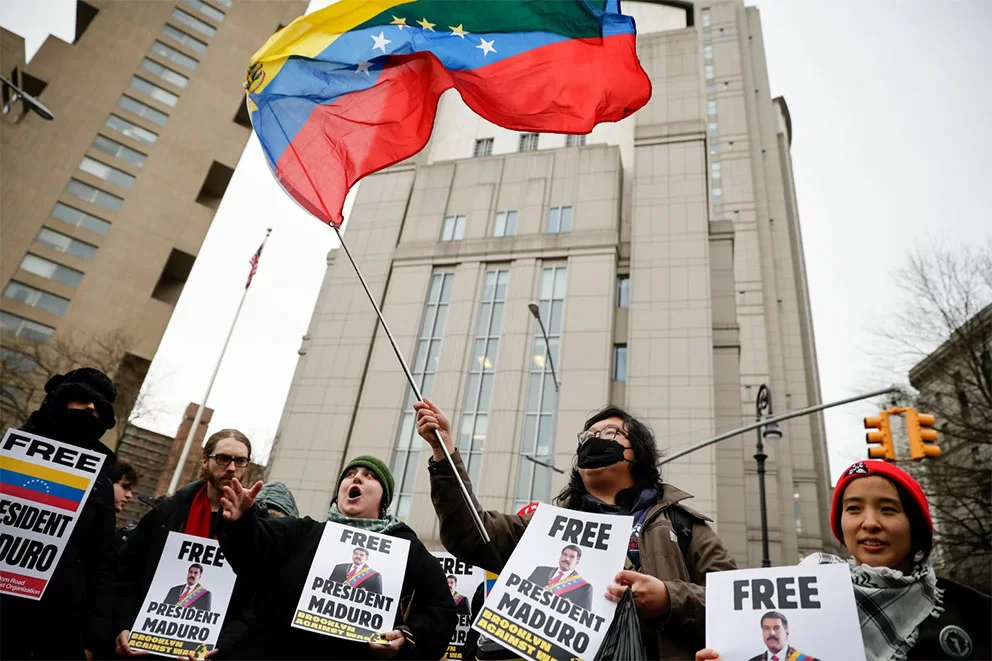
Outside the courthouse, polarized demonstrations unfolded with competing chants and banners. Supporters displayed messages reading “USA, hands off Venezuela” while opponents expressed gratitude to President Trump for pursuing legal action.
The four-count indictment alleges Maduro and his associates collaborated with drug cartels for decades to smuggle thousands of tons of cocaine into the United States while possessing illegal machine guns and heavy weaponry. Legal experts anticipate defense teams will invoke head-of-state immunity arguments, though such defenses have rarely succeeded in comparable historical cases.
The case represents one of the most significant and complex prosecutions ever brought against a former national leader. With the next hearing scheduled for March 17th, the proceedings have ignited diplomatic tensions as Venezuela’s interim government and China call for sovereignty respect while the United States maintains its commitment to judicial process.