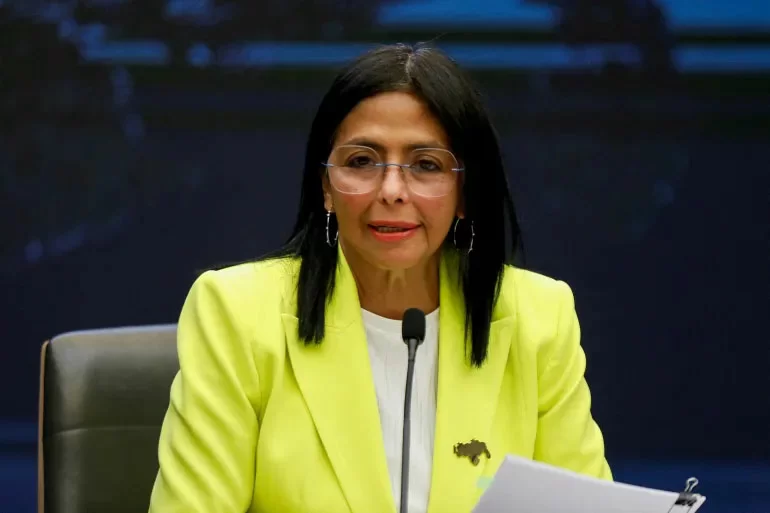
In a dramatic diplomatic reversal, Venezuela’s interim President Delcy Rodríguez has signaled willingness to collaborate with the United States regarding her nation’s future, despite previously condemning the military operation that captured Nicolás Maduro as “an atrocity violating international law.
Rodríguez, appointed interim leader by Venezuela’s Supreme Court shortly after Maduro’s capture by U.S. special forces, communicated via Telegram on Sunday that establishing “a balanced and respectful relationship between the U.S. and Venezuela” now represents a priority. Her statement marked a significant departure from her Saturday television address where she declared Maduro the “only legitimate president” and characterized the Trump administration as “extremists.
The capture operation—described as one of America’s most perilous military actions since the 2011 Osama bin Laden raid—resulted in Maduro and his wife Cilia Flores facing federal charges in New York including narcoterrorism, cocaine trafficking, and weapons offenses. Maduro is scheduled to appear before a Manhattan federal court on Monday.
President Trump’s response evolved throughout the crisis. Initially suggesting productive dialogue with Rodríguez, he subsequently threatened severe consequences following her criticism and warned of potential additional military interventions, including ground troops, asserting American dominance in Venezuela.
Simultaneously, Rodríguez established a commission led by Foreign Minister Yvan Gil and her brother Jorge Rodríguez, head of the National Assembly, dedicated to securing Maduro and Flores’s release from U.S. detention. Observers have drawn parallels between Maduro’s situation and that of former Panamanian leader Manuel Noriega, arrested by U.S. forces in 1990 and convicted on drug-related charges.
U.S. officials frame Maduro’s capture as judicial enforcement regarding 2020 indictments, while Trump additionally cited concerns over Venezuelan migration flows and nationalization of American oil assets as operation motivations.