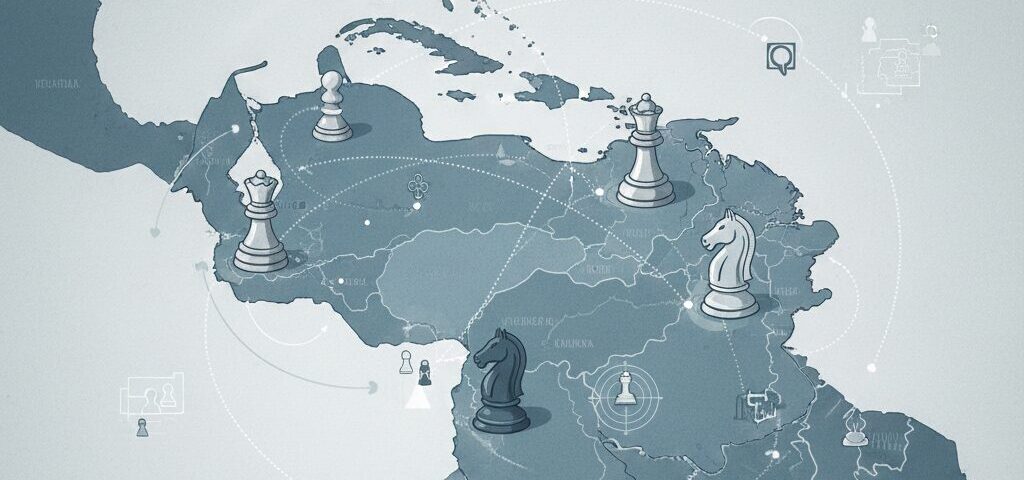
A recent U.S. military operation targeting Venezuelan territory has generated significant geopolitical repercussions across the Western Hemisphere, with unconfirmed reports suggesting the capture of President Nicolás Maduro and his spouse by American forces. This development has reignited longstanding debates about sovereignty, foreign intervention, and great-power competition in Latin America.
The operation represents an escalation of Washington’s prolonged pressure campaign against Caracas, which has historically centered on allegations of narcotics trafficking, corruption, and governance deficiencies. Recent months witnessed increased U.S. naval deployments and targeted strikes against vessels suspected of drug trafficking operations in Caribbean and eastern Pacific waters.
Contrary to popular narratives suggesting energy motivations驱动 behind American actions, analytical evidence contradicts the theory that the United States seeks to control Venezuela’s substantial oil reserves. The U.S. currently maintains energy self-sufficiency through domestic production and exports, while Venezuelan crude requires specialized refining infrastructure that would demand substantial investment and modernization efforts.
A more plausible explanation centers on geopolitical considerations, as Venezuela’s deepening alliances with nations designated as adversarial by Washington—including China, Russia, and Iran—has created strategic concerns about great-power competition extending into America’s traditional sphere of influence. The military campaign appears primarily focused on countering perceived hostile influences rather than securing energy resources.
Regional responses have revealed profound political divisions across Latin America and the Caribbean. Multiple left-leaning governments, including those of Brazil, Mexico, and Chile, have vehemently condemned the operations as violations of international law and sovereignty, advocating instead for diplomatic solutions. Smaller Caribbean nations expressed concerns about potential refugee crises, economic disruption, and forced political alignment.
Notably, some regional voices, including Dominican ceremonial President H.E. Sylvanie Burton, have characterized U.S. actions as ‘bullying behavior toward smaller nations,’ reflecting deep-seated sensitivities about power asymmetry and interventionism. While limited cooperation on counternarcotics operations continues with some Caribbean states, most governments have emphasized the primacy of peaceful conflict resolution and respect for national sovereignty.