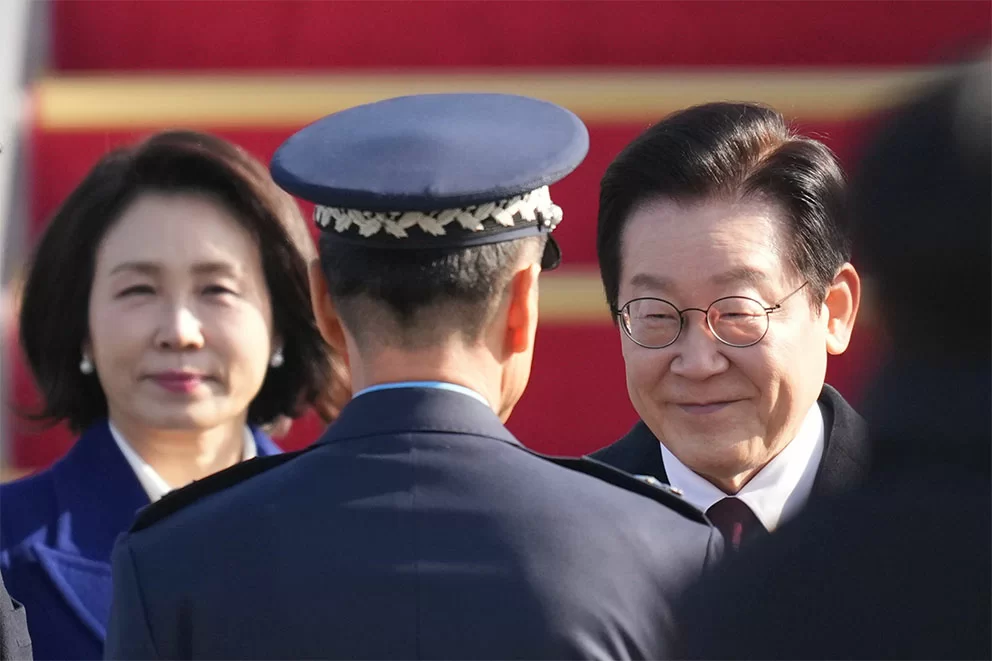
South Korean President Lee Jae Myung arrived in Beijing on Sunday for a pivotal four-day state visit, marking his first official trip to China since assuming office in June 2025. The carefully timed diplomatic mission unfolds against a backdrop of escalating regional tensions, particularly regarding Taiwan and the Korean Peninsula.
President Lee was greeted with full ceremonial honors upon his afternoon arrival, with plans to engage in comprehensive discussions with Chinese President Xi Jinping—their second high-level meeting within two months. In pre-departure remarks recorded at Seoul’s Blue House for China’s state broadcaster CCTV, Lee emphasized the critical importance of Sino-South Korean relations while reaffirming Seoul’s adherence to the ‘One-China’ policy regarding Taiwan. He characterized President Xi as “a genuinely reliable neighbor” and stressed that healthy bilateral relations must be founded on mutual respect.
The visit occurs amid heightened military posturing in the region. Recent provocations include Japanese Prime Minister Sanae Takaichi’s November statement suggesting potential military intervention if China acts against Taiwan, which prompted Beijing to conduct large-scale military exercises around the island last week. Simultaneously, China’s Foreign Ministry accused Taiwan’s government of pursuing independence with U.S. support, leading to Chinese sanctions against twenty American defense companies in December.
President Lee navigates a delicate balancing act, maintaining that South Korea’s military alliance with the United States need not deteriorate relations with China or lead to confrontation. He acknowledged that previous misunderstandings have hampered bilateral cooperation and expressed his intention to use this visit to bridge differences and elevate collaborative efforts.
The agenda extends beyond bilateral matters to include critical discussions about North Korea’s nuclear program. Seoul and Washington have repeatedly urged China—Pyongyang’s traditional ally—to leverage its influence to bring North Korea back to negotiation tables and facilitate denuclearization. These talks gained additional urgency as North Korea test-launched multiple ballistic missiles toward the sea on Sunday, demonstrating military capabilities ahead of an upcoming party congress.
President Lee’s schedule includes meetings with National People’s Congress Chairman Zhao Leji and Premier Li Qiang, where officials anticipate in-depth conversations on security and economic cooperation. South Korean National Security Advisor Wi Sung-lac emphasized that the administration seeks concrete outcomes that will directly benefit citizens of both nations.
This diplomatic engagement represents South Korea’s strategic effort to carve out political space within East Asia’s complex geopolitical landscape, where tensions between major powers continue to intensify. The outcomes of these discussions may significantly influence regional power dynamics and stability in the coming months.