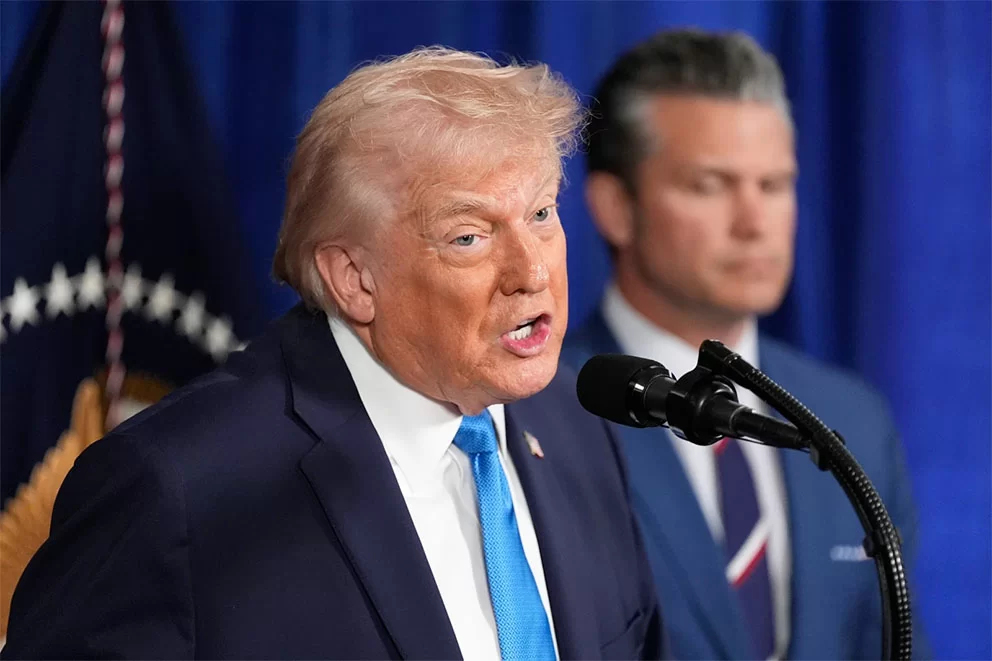
In a historic development that marks an unprecedented escalation of U.S. involvement in Latin America, President Donald Trump announced from his Mar-a-Lago estate that the United States will govern Venezuela directly until a “secure transition” of power can be established. The declaration follows a meticulously planned military operation that resulted in the capture of Venezuelan leader Nicolás Maduro and his wife.
Speaking at a press conference with Defense Secretary Pete Hegseth at his side, Trump characterized Maduro as a leader who has “perpetually engaged in violence, terror, and subversion against the United States,” threatening both American citizens and regional stability. The president revealed that overwhelming evidence of Maduro’s crimes had been obtained by U.S. judicial authorities, describing the situation as “both horrifying and breathtaking.”
The military operation, codenamed “Absolute Resolve,” was executed on January 2 at 22:46 local time after months of preparation. Chairman of the Joint Chiefs of Staff General Dan Caine disclosed that over 150 aircraft provided air cover while intervention forces stormed Maduro’s residence in Caracas. Venezuelan air defenses were neutralized, and despite one helicopter being struck, it remained operational. Maduro and his wife surrendered without further incident and were taken into custody by the U.S. Department of Justice.
Trump has appointed Secretary of State Marco Rubio to lead a governance team that will oversee Venezuela’s administration. The president expressed skepticism about opposition leader María Corina Machado’s capacity to lead, questioning her popular support among Venezuelans.
In a significant policy statement, Trump indicated that ground troops would be deployed if necessary and promised that U.S. oil companies would invest billions to restore Venezuela’s damaged oil infrastructure. Profits from these ventures would be partially returned to Venezuela while providing compensation to the United States.
International reactions have been mixed, with allies including Italy and Israel expressing support while other nations warn of escalation and emphasize the importance of dialogue and international law. Regional neighbors are monitoring developments closely due to potential impacts on refugee flows and stability. Brazil temporarily closed its border with Venezuela but has since reopened it.
The legal legitimacy of the operation remains contentious, as Trump did not consult Congress beforehand, raising questions about the action’s compliance with international legal standards.