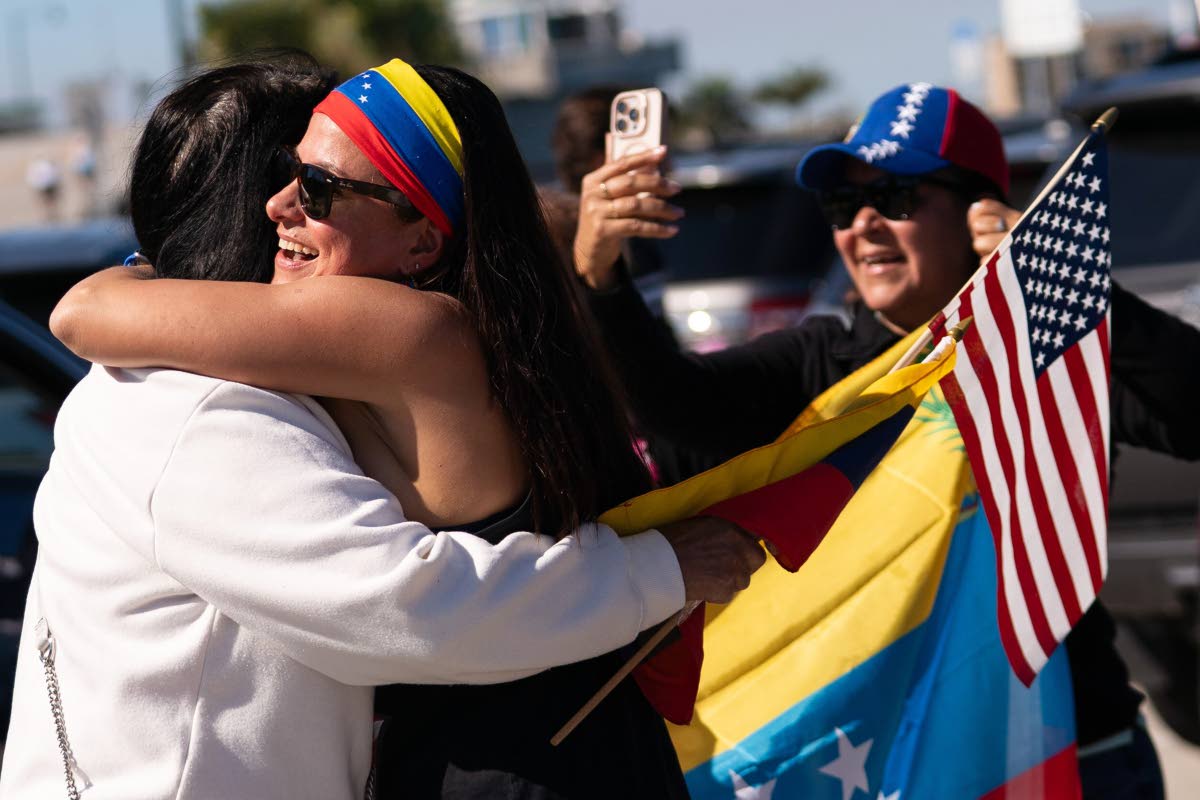
In a dramatic predawn operation on January 3, 2026, US special forces successfully captured Venezuelan President Nicolás Maduro and First Lady Cilia Flores from a heavily fortified compound in Caracas. The operation, reportedly involving the elite Delta Force unit, marks an unprecedented military intervention in South American politics.
Trinidad and Tobago Prime Minister Kamla Persad-Bissessar immediately celebrated the capture as a “moment of liberation” for the Venezuelan people. In an official statement on social media platform X, she expressed hope that Venezuela would now “transition away from years of oppression and dictatorship toward democracy, justice, and prosperity.”
The PM’s endorsement came shortly after former US President Donald Trump detailed the operation in a press conference, announcing that the United States would assume control of Venezuela’s governance temporarily. Trump revealed plans for American oil companies to rehabilitate Venezuela’s energy infrastructure while casting doubt on whether exiled opposition leader María Corina Machado or current Vice President Delcy Rodríguez would participate in any interim government.
The geopolitical shift has significant implications for Trinidad and Tobago’s energy interests. Following bilateral discussions with US Secretary of State Marco Rubio, Trinidad secured a six-month OFAC license for the cross-border Dragon gas project—a reversal from Persad-Bissessar’s earlier declaration that the deal was “dead” after taking office.
Despite maintaining formal neutrality, the Trinidadian government has supported broader US military activities in the region, including radar system installations in Tobago and granting indefinite transit rights for US military flights. This stance has created divergence with other CARICOM members concerned about regional militarization.