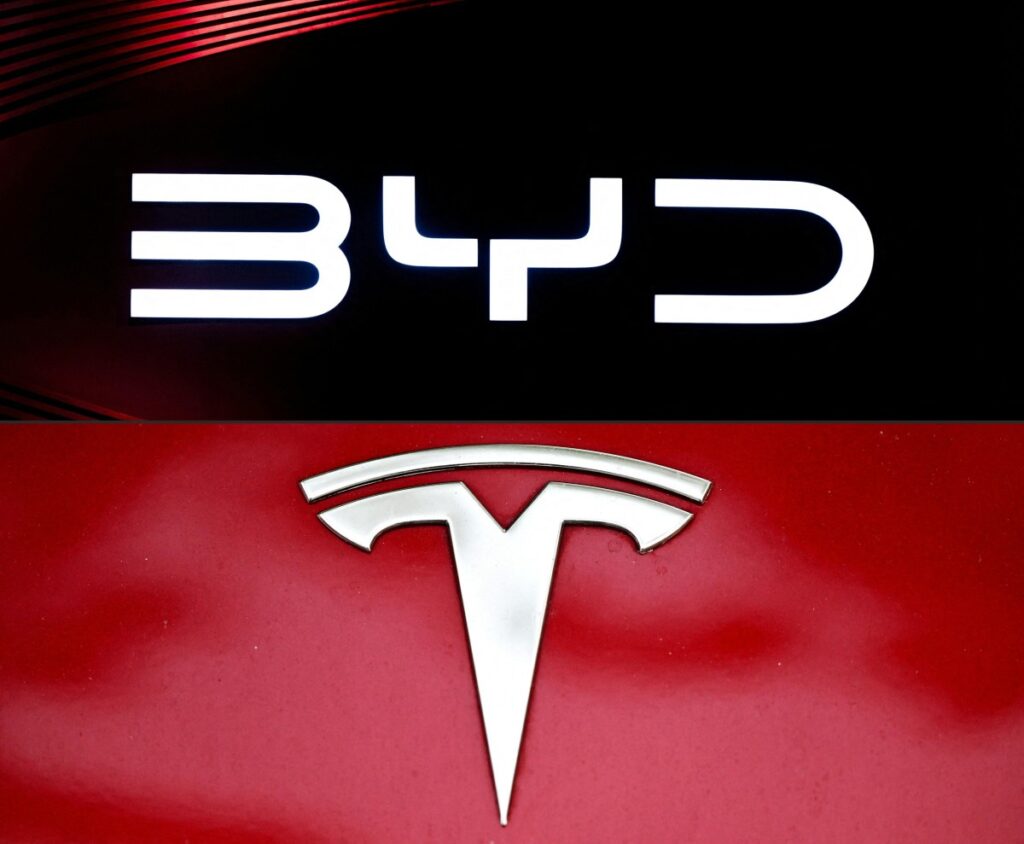
In a significant industry shift, Tesla Inc. has relinquished its position as the world’s leading electric vehicle manufacturer to Chinese automotive powerhouse BYD, according to year-end sales reports. The Elon Musk-led company reported approximately 1.64 million EV deliveries for 2025, representing an 8% decline from the previous year’s performance. This downturn contrasts sharply with BYD’s announcement of 2.26 million electric vehicles sold during the same period.
The fourth quarter proved particularly challenging for Tesla, with 418,227 deliveries falling substantially below the FactSet consensus projection of 449,000 units. Industry analysts attribute this performance to multiple converging factors, including the expiration of the $7,500 federal tax credit in September 2025, which created immediate headwinds for consumer demand. Additionally, market observers note that Musk’s overt political endorsements of former President Donald Trump and far-right figures have impacted brand perception in key markets.
BYD’s ascendancy marks a watershed moment in global automotive competition. Founded in 1995 as a battery specialist, the Shenzhen-based manufacturer has leveraged China’s position as the world’s largest new energy vehicle market to achieve remarkable scale. The company’s diversified approach—encompassing fully electric and plug-in hybrid vehicles—has proven strategically advantageous in addressing varied consumer preferences across international markets.
While geopolitical tensions and substantial tariffs limit Chinese EV manufacturers’ access to the American market, BYD has successfully expanded its global footprint through aggressive growth in Southeast Asia, the Middle East, and European territories. This international expansion occurs as domestic Chinese consumers demonstrate increasing price sensitivity, compelling manufacturers to seek growth opportunities abroad.
Financial markets responded to Tesla’s announcement with measured concern, as shares declined 2.6% in New York trading. However, Wedbush Securities analysts noted that the quarterly performance exceeded some pessimistic forecasts, suggesting underlying resilience despite challenging conditions. The firm highlighted that regulatory approvals for autonomous driving technology in Europe remain a critical hurdle, with potential for sales recovery once these barriers are addressed.
Emerging markets present a silver lining for Tesla, with smaller regions demonstrating stronger-than-anticipated growth that may partially offset declines in major territories like China and Europe. Industry watchers anticipate a period of market rebalancing as EV demand patterns stabilize following the tax credit expiration and manufacturers adapt to new competitive realities.