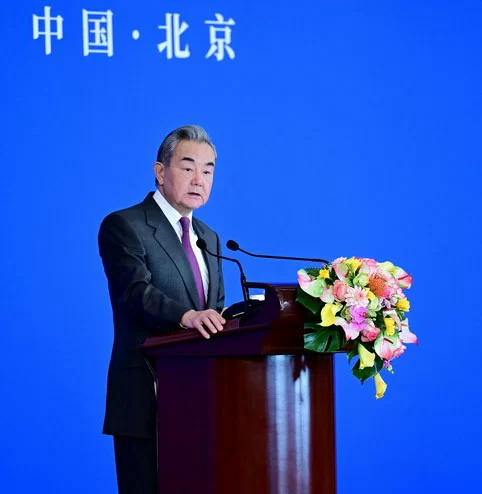
In a comprehensive address at the Symposium on International Situation and China’s Foreign Relations, Chinese Foreign Minister Wang Yi articulated China’s strategic diplomatic direction for the coming years against the backdrop of profound global transformations. The speech delivered a moment of strategic reflection and forward-looking vision as the world navigates fundamental shifts in international order.
Minister Wang characterized 2025 as a pivotal historical juncture where nations confronted critical choices between unilateral hegemony and emerging multipolarity, amid escalating geopolitical and economic tensions. Positioning China as a stabilizing force, Wang emphasized the nation’s commitment to peace, cooperation, and justice in international affairs.
Under President Xi Jinping’s leadership, China is pursuing diplomacy with distinctive Chinese characteristics focused on building a shared future for humanity. The address highlighted China’s relationships with major global partners including the United States, Russia, European Union, and Global South nations. Wang specifically noted China’s active engagement in seeking peaceful resolutions to conflicts, including the Ukraine crisis.
The Foreign Minister underscored China’s dedication to fostering positive relations with neighboring countries and across the Asia-Pacific region, emphasizing security, prosperity, and regional cooperation. China’s Belt and Road Initiative and international trade agreements were identified as central components of Beijing’s strategy to promote openness and economic development.
Wang articulated China’s commitment to reforming global governance systems, advocating for enhanced justice, equality, and multilateralism in international relations. China aims to assume a leadership role in strengthening United Nations mechanisms and supporting developing nations.
Regarding core national interests, Wang reiterated China’s unwavering position on sovereignty and territorial integrity, with particular emphasis on Taiwan. China firmly opposes any separatist activities and external interference, characterizing reunification with Taiwan as an irreversible historical mission.
Looking toward 2026, Wang announced China’s plans to intensify diplomatic efforts across multiple fronts: providing strategic support for national development, deepening bilateral and multilateral relationships, promoting regional stability, and advancing global cooperation and openness.
The address positions China as a confident and determined responsible major power committed to shaping a stable, peaceful, and just world order through proactive diplomatic engagement.