Escalating military tensions between the United States and Venezuela in the southern Caribbean are creating significant economic uncertainty in Trinidad and Tobago, according to the latest monetary policy report from the nation’s Central Bank. The report, released December 31, 2025, identifies the “fluid geopolitical tension” as a primary contributor to domestic economic instability.
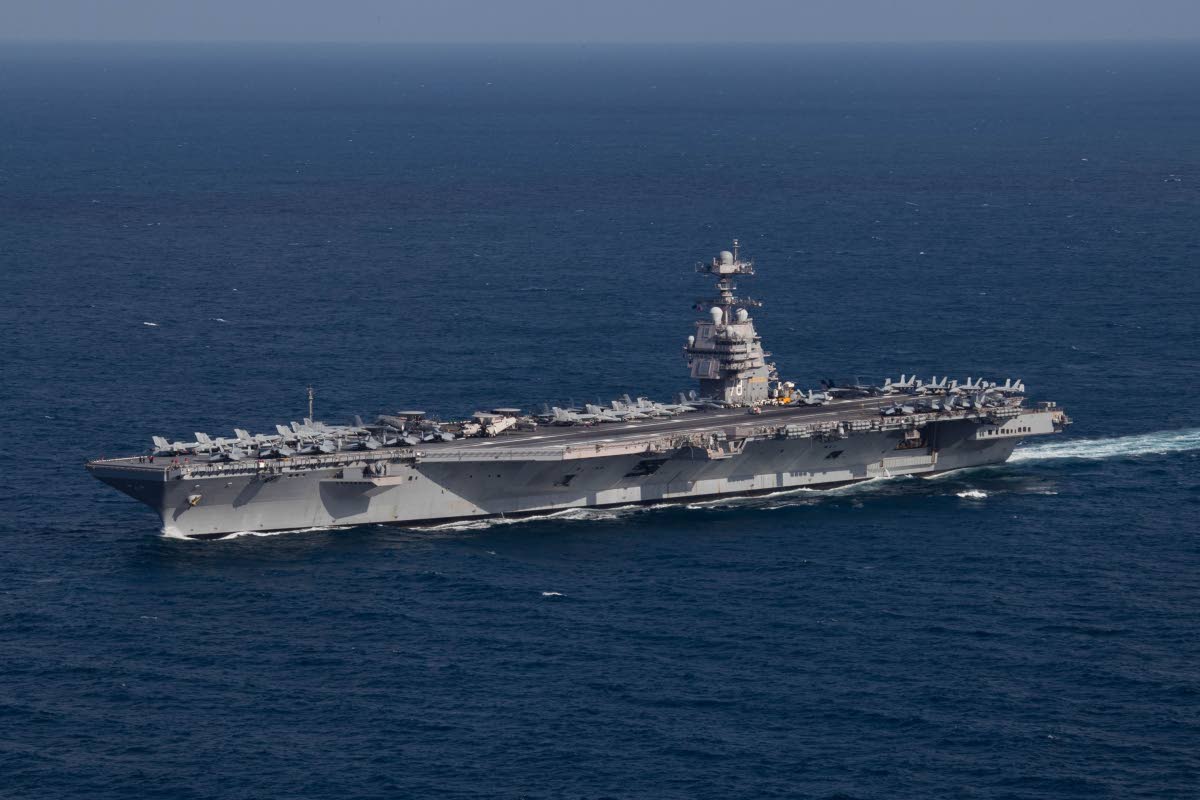
The military buildup began in August 2025 with the deployment of guided missile destroyers USS Gravely, Sampson, and Jason Dunham to the region. This presence has since expanded dramatically to include the aircraft carrier USS Gerald R. Ford and its strike group, US amphibious assault vessels, the nuclear attack submarine USS Newport News, and elements of the US Marine Corps 22nd Marine Expeditionary Unit (MEU). Notably, this marks the MEU’s first Caribbean engagement since the 1983 invasion of Grenada.
Trinidad and Tobago has facilitated this military presence by granting the US military indefinite access to Piarco International and ANR Robinson International Airports for transit flights. In November, US Marines established a military radar system at ANR Robinson International Airport.
Prime Minister Kamla Persad-Bissessar has consistently supported the US deployment, including military strikes on alleged drug vessels that have resulted in at least 107 fatalities across 31 vessels since September 2. This week, President Trump confirmed the destruction of an alleged onshore drug facility via drone strike with CIA involvement.
The Prime Minister has condemned regional critics of the deployment, asserting that the United States represents Trinidad and Tobago’s sole protector against external threats.
Economically, the Central Bank reports that growth remains “somewhat tentative” despite increased energy production from two new natural gas fields in the second quarter of 2025. This growth is being partially offset by a non-energy sector losing momentum across multiple sub-sectors, indicating the domestic economy still requires support for sustained recovery.
International context shows the IMF projecting global output expansion of 3.2% in 2025, marginally down from 3.3% in 2024. While the US economy demonstrates durability despite labor market challenges and elevated inflation, other major economies experience softer growth with persistent inflation.
Energy markets reflect these uncertain conditions, with West Texas Intermediate crude slipping below $60 per barrel, averaging $59.57 in November and remaining below that threshold in December. This presents challenges for Trinidad and Tobago’s budget, which was pegged against crude oil at $73.25 per barrel and natural gas at $4.25 per mmbtu.