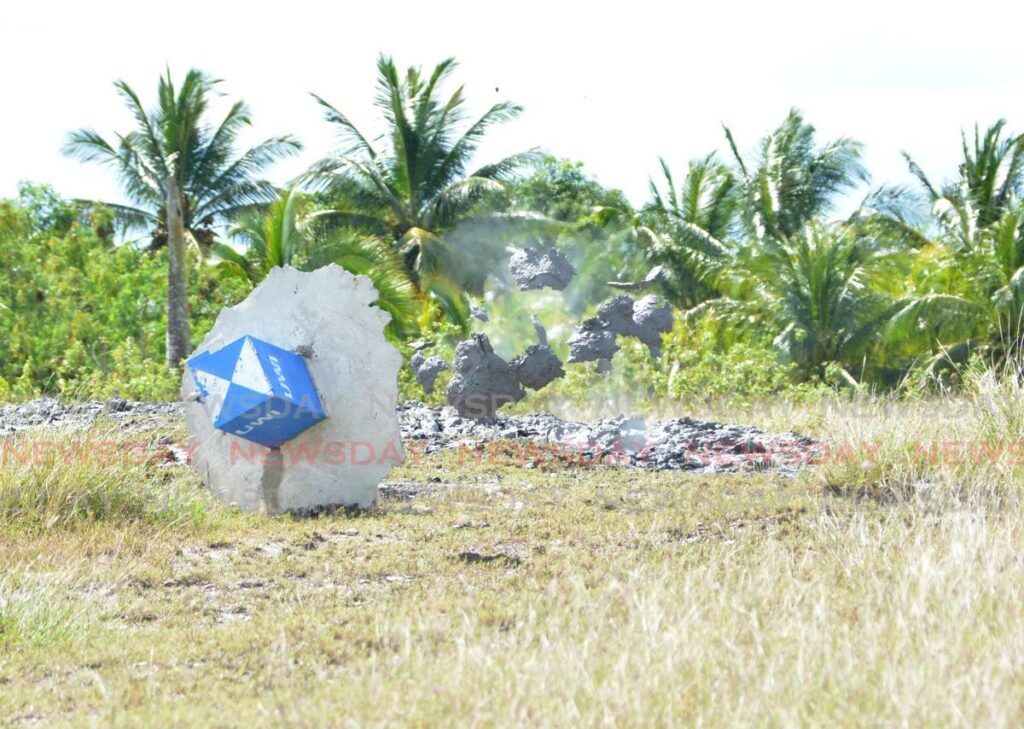
Despite surface-level calm returning to Piparo’s mud volcano, University of the West Indies (UWI) researchers maintain urgent warnings of escalating eruption risks as underground pressure continues mounting. The research team, led by Professor Oshaine Blake and PhD candidate Kerneese Ramjarrie, documented sustained pressure increases in their December 30 advisory following the volcano’s December 24 explosive activity.
Critical monitoring data reveals persistent pressure accumulation northwest of the main vent at Monitoring Well #6, where readings surged from 55 to 62.5 PSI during the eruption event and continue fluctuating around 60.5 PSI. Researchers attribute this dangerous pressure build-up to limited fracture networks in the area that prevent adequate pressure release.
Meanwhile, the main vent sensor (Monitoring Well #3) captured a characteristic ‘breathing’ pattern—pressure rising to 22 PSI before dropping to 19 PSI and oscillating within a 1 PSI range. This rhythmic pressure variation indicates an active volcanic system repeatedly building and releasing energy through subsurface fractures.
The December 24 eruption caused substantial community damage, ejecting gas and mud chunks that partially destroyed two homes, disrupted utilities, and triggered road collapses. Despite rehabilitation efforts by local authorities restoring electricity and water services, residents face ongoing displacement. Sixty-five-year-old Kim Seebaran abandoned her home of 32 years due to safety concerns, while Fedell Solomon relocated his three young daughters fearing sudden evacuations.
UWI scientists urgently recommend enhanced monitoring capabilities and immediate funding for predictive systems. Their findings will inform hazard zoning maps and emergency response planning, with stakeholders convening this week to reassess community safety protocols. Residents are advised to avoid fractured areas, report new gas emissions or ground movement, and heed all emergency directives.