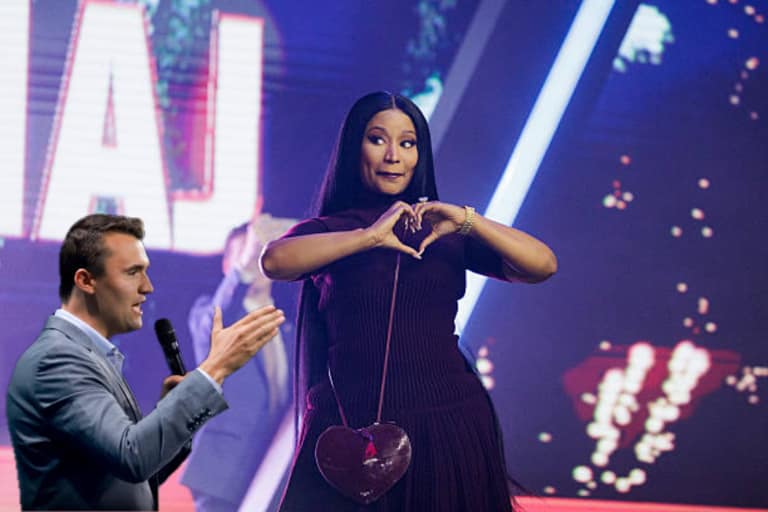
A controversial petition demanding the deportation of rapper Nicki Minaj to her birthplace of Trinidad and Tobago has rapidly accumulated over 50,000 signatures on Change.org. The campaign emerged following Minaj’s appearance at Turning Point USA’s AmericaFest, where she publicly endorsed former President Donald Trump and Vice President JD Vance while sharing the platform with prominent conservative figures.
The petition specifically addresses U.S. government agencies including ICE, the FBI, and the White House, urging authorities to review Minaj’s residency status. It cites multiple grievances including her verbal attacks on The Carters (Beyoncé and Jay-Z), her marriage to registered sex offender Kenneth Petty, and allegations that she has intimidated her husband’s victims. The petition argues that ‘deporting Nicki Minaj back to her home country, Trinidad, seems the most viable solution to curtail her harmful actions’ and would ‘send a clear message that harassment and support of criminal activity will not be tolerated.’
Many signatories have expressed concerns about Minaj’s apparent political pivot, which marks a significant departure from her previous advocacy for LGBTQ+ rights and racial justice. One signee commented on the petition’s platform about unequal treatment of immigrants, drawing parallels to their own family’s experiences with the immigration system.
While the petition appears to contain satirical elements—the organizer identifies as ‘Pedonika Minaj’—it touches on factual aspects of Minaj’s immigration status. During a recent TikTok live session, Minaj confirmed she is not a U.S. citizen but holds a green card, while controversially suggesting she deserved honorary citizenship due to taxes paid.
Legal experts emphasize that such petitions hold no binding authority and deportation proceedings against a long-term legal resident like Minaj would be highly improbable, particularly given her established residency since childhood. Despite its lack of legal standing, the campaign highlights the intense polarization surrounding celebrity political endorsements and the evolving expectations of artists in sociopolitical discourse.