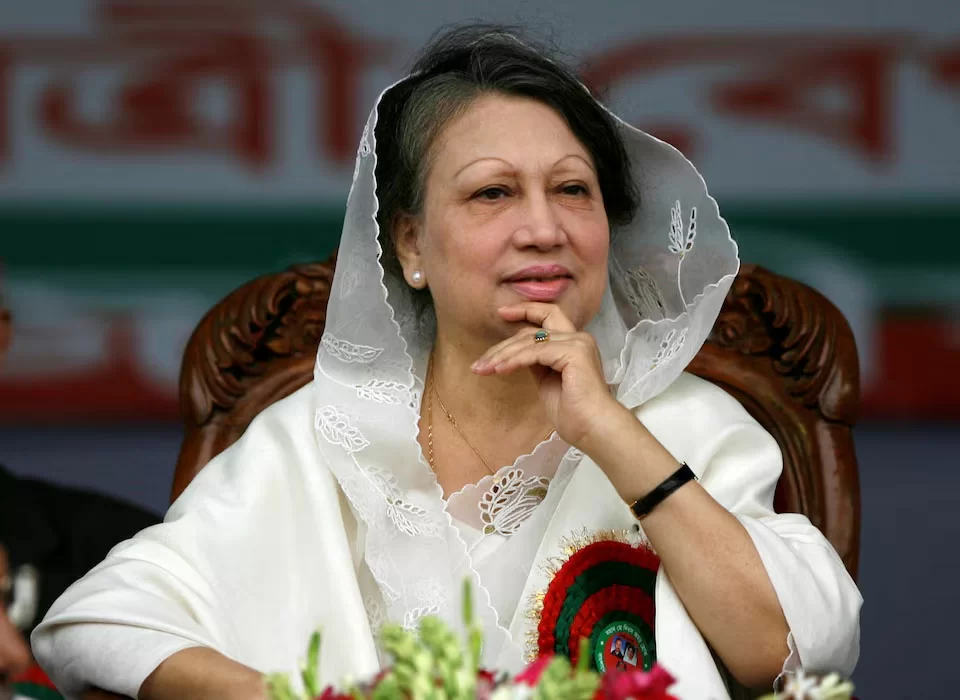
Bangladesh’s political landscape has been permanently altered with the passing of Begum Khaleda Zia, the nation’s first female prime minister, who died Tuesday at age 80 after a prolonged illness. The opposition Bangladesh Nationalist Party (BNP) confirmed her death following an extended battle with advanced liver cirrhosis, arthritis, diabetes, and cardiovascular complications.
Khaleda Zia’s political journey represents one of modern South Asia’s most compelling narratives. She initially rose to power in 1991 through a surprising electoral victory against her rival Sheikh Hasina, becoming only the second woman to lead a democratic government in a predominantly Muslim nation after Pakistan’s Benazir Bhutto.
Her legacy is characterized by both groundbreaking achievements and intense political conflicts. During her tenure, she transformed Bangladesh’s governmental structure by replacing the presidential system with a parliamentary framework, relaxed restrictions on foreign investment, and implemented mandatory free basic education.
The relationship between Khaleda Zia and Sheikh Hasina defined decades of Bangladeshi politics. Initially collaborators in the 1990 pro-democracy movement that ousted military ruler Hossain Mohammad Ershad, their alliance quickly dissolved into what became known as the “Battling Begums” rivalry—a reference to the Urdu honorific for prominent women.
Their contrasting leadership styles became legendary: Khaleda, described as reserved, traditional, and carefully measured in speech; Hasina, markedly more outspoken and assertive. This personal and political dichotomy fueled a power struggle that would dominate the nation’s affairs for over three decades.
Khaleda’s second term as prime minister (2001-2006) was marred by rising Islamic militancy and corruption allegations. The 2004 grenade attack on a Hasina rally, which killed over 20 people and injured 500, remains one of the most controversial events of this period, with Khaleda’s government and its Islamic allies widely blamed.
The subsequent years saw Khaleda’s political fortunes decline dramatically. After a military-backed caretaker government assumed power in 2006, both she and Hasina faced approximately one year of imprisonment on corruption charges. Though released before the 2008 elections, Khaleda never regained power.
Her later years were marked by legal battles and deteriorating health. In 2018, she was imprisoned on corruption charges related to embezzlement of orphanage funds—accusations she maintained were politically motivated attempts to exclude her family from politics. She was transferred to house arrest in March 2020 on humanitarian grounds as her health declined.
The recent political upheaval in Bangladesh had created new dynamics for Khaleda’s legacy. Following student-led protests that ousted Hasina in August 2024, an interim government under Nobel Peace Prize winner Muhammad Yunus assumed control. Hasina herself was sentenced to death in absentia in November for her lethal suppression of student protests.
Khaleda’s release from house arrest in August 2024 and subsequent court exonerations in early 2025—both in the corruption case that had imprisoned her and the 2004 grenade attack allegations against her son Tarique Rahman—marked significant late-life developments.
The return of her son Tarique Rahman after nearly 17 years in self-exile last week, combined with the BNP’s position as favorite for February’s parliamentary elections, suggested a potential political resurgence that her death has now cut short.
Khaleda Zia’s story began not as a politician but as a mother dedicated to raising her two sons. Her entry into politics came only after the 1981 assassination of her husband, military leader and president Ziaur Rahman, during a failed coup. Assuming leadership of his BNP party three years later, she vowed to continue his mission to “free Bangladesh from poverty and economic backwardness.”
Her passing closes a monumental chapter in Bangladesh’s history while leaving unanswered questions about the nation’s political future and the resolution of the epic rivalry that shaped its democracy.