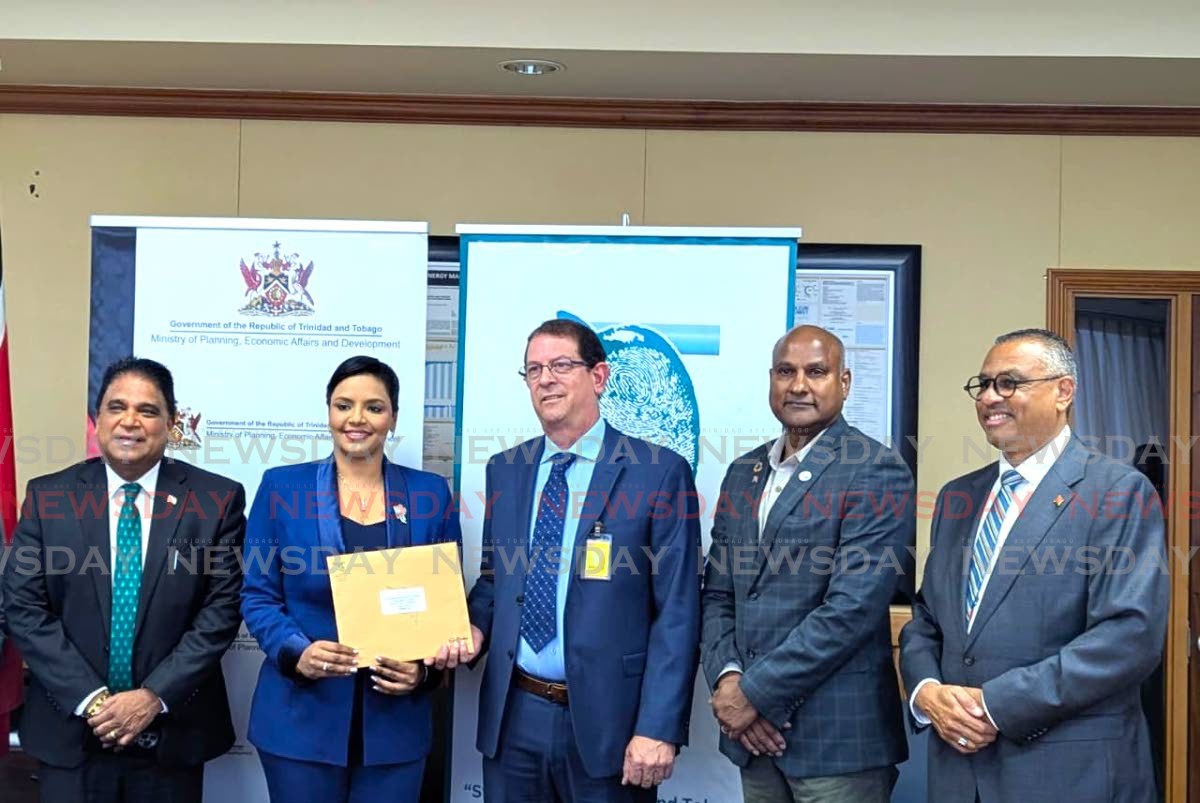
In a significant development for Trinidad and Tobago’s energy sector, ExxonMobil has received formal environmental clearance to commence seismic surveys in the massive TT Ultra Deep 1 (TTUD-1) block, marking a pivotal moment in the nation’s economic revitalization efforts.
The Environmental Management Authority (EMA) granted the Certificate of Environmental Clearance (CEC) during a ceremony at the Eric Williams Finance Building in Port of Spain on December 29. Energy Minister Dr. Roodal Moonilal emphasized that ExxonMobil’s return could fundamentally reshape the country’s economic future, though he cautioned that bureaucratic delays continue to cost the nation substantial revenue.
The TTUD-1 block, an aggregation of seven parcels east of Trinidad, represents an enormous undertaking at 7,165 square kilometers—significantly larger than Trinidad’s 5,128km surface area. The project’s initial phase carries a price tag of US$42.5 million (TT$288 million), with full development costs estimated between US$16.4 billion and US$21.7 billion.
Technological advancements have been crucial in enabling this deepwater exploration. Modern drill ships, semi-submersibles, and high-pressure temperature technologies have overcome previous limitations, allowing operations at depths exceeding 2,000 meters (approximately 6,560 feet).
ExxonMobil’s agreement includes drilling two exploration wells initially, with optional second and third phases containing additional wells. The company has committed to US$12.8 million (TT$87 million) in financial obligations during phase one, covering administrative charges, training contributions, research and development funding, technical assistance, equipment bonuses, and scholarships.
Minister Moonilal revealed that accelerated decision-making could generate US$120 million annually for the nation. His ministry currently coordinates with 16 state agencies and ministries for various approvals, licenses, and legal orders, creating complex logistical challenges.
To address these inefficiencies, the government is developing an energy hub that will streamline sector processes. With Cabinet approval pending, this hub will integrate entities both within and outside the energy ministry to resolve issues in real time—from lease operators facing bureaucratic delays to international companies awaiting work permits.
Concurrently, Planning, Economic Affairs and Development Minister Dr. Kennedy Swaratsingh announced the launch of the Priority Projects Portal, designed to provide transparent tracking of national initiatives as part of the government’s broader economic revitalization strategy.