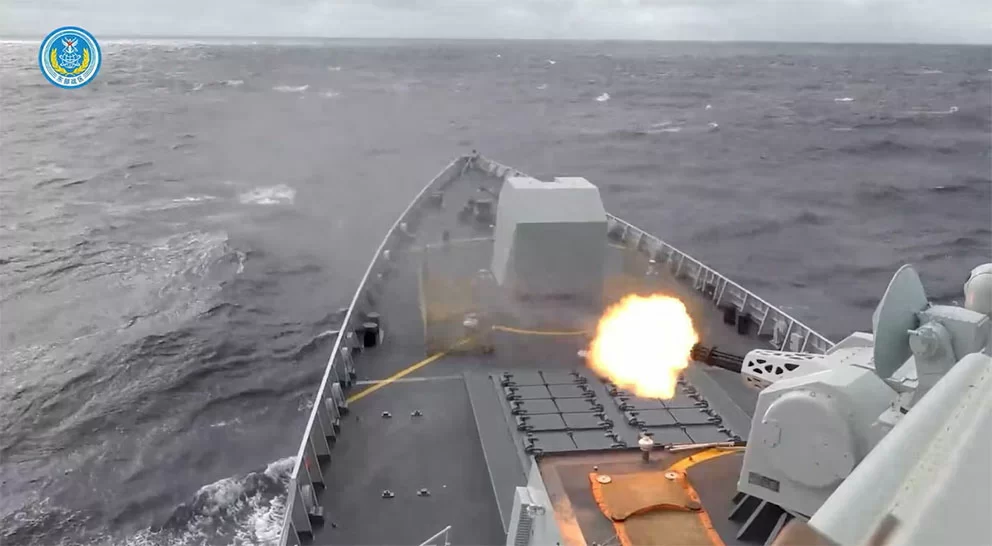
China has initiated its most extensive military exercises to date in the Taiwan Strait, deploying a formidable array of naval vessels, combat aircraft, and artillery systems in an operation codenamed “Justice Mission 2025.” The drills, which commenced on Monday, represent a significant escalation in Beijing’s demonstration of military capability, explicitly designed to simulate the isolation of Taiwan from external support channels.
The Eastern Theater Command of the People’s Liberation Army released footage showing advanced weaponry being deployed during the exercises, which are positioned closer to Taiwan’s territory than previous military maneuvers. Seven designated zones surrounding the island have been established for live-fire exercises and simulated blockade operations, effectively disrupting maritime traffic near key Taiwanese ports.
Chinese Foreign Ministry spokesperson Lin Jian characterized the operations as “punitive and deterrent measures” targeting what Beijing terms “Taiwanese separatist activities.” The drills directly respond to recent U.S. weapons transfers to Taiwan, which China views as unacceptable foreign interference in its internal affairs. Lin emphasized that protecting national sovereignty and territorial integrity remains China’s “sacred right” under international law.
Taiwan has responded by elevating its military readiness and showcasing recently acquired American defense systems, including the HIMARS rocket platform capable of striking deep into Chinese territory. Taiwanese defense officials have reiterated their commitment to self-defense capabilities while calling for international support against what they describe as “coercive military posturing.
Security analysts note that the exercises blur the line between routine training and potential preparation for actual conflict scenarios. The proximity of Chinese forces to Taiwan’s main island significantly reduces potential response time for U.S. and allied forces, creating new escalation risks in the strategically vital waterway.
The geopolitical implications extend beyond immediate military concerns. China’s combination of hardware demonstration and political messaging reinforces its position that any movement toward Taiwanese independence—particularly when supported by external powers—represents a red line that Beijing will enforce with increasing severity. This development forces international policymakers to balance stability maintenance with support for Taiwan’s defensive needs, creating complex diplomatic challenges for the coming months.