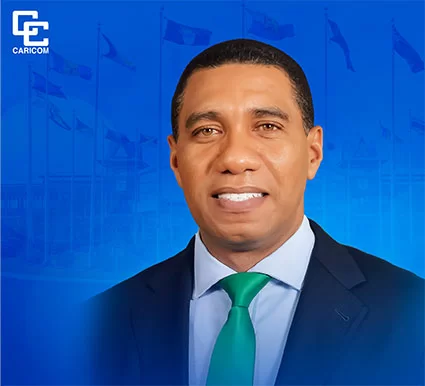
Jamaican Prime Minister Andrew Holness has concluded his tenure as Chairman of the Caribbean Community (CARICOM) for the second half of 2025, emphasizing the profound unity and shared purpose that defined regional cooperation during his leadership. In his closing address, Holness expressed unwavering confidence in CARICOM’s collective strength and optimism about the member states’ shared future.
The year 2025 proved transformative for the Caribbean region, particularly in post-hurricane recovery efforts following the devastating impact of Hurricane Melissa. Holness highlighted how the crisis demonstrated the unshakable solidarity among Caribbean nations, stating, ‘As members of the Caribbean family, we never stand alone.’
Significant milestones were achieved under Holness’s leadership, including substantial progress in regional integration and economic advancement. A historic development emerged with the announcement that Barbados, Belize, Dominica, and St. Vincent and the Grenadines will implement complete freedom of movement among their citizens starting October 1, 2025. This ‘concentric circles’ approach allows for enhanced cooperation while maintaining flexibility for other member states to join subsequently.
CARICOM also strengthened its global positioning through strategic partnerships, particularly with the Caribbean Private Sector Organization (CPSO). The expansion of regional and international air transportation networks, alongside initiatives to bolster food and nutrition security, marked additional achievements.
In international diplomacy, CARICOM maintained a unified voice during critical forums including the United Nations General Assembly, G20 Summit, and CELAC-EU Summit. This cohesion enhanced foreign policy coordination and enabled proactive crisis management.
Security challenges remained prioritized throughout Holness’s chairmanship, with transnational organized crime and gang violence addressed through the Montego Bay Declaration adopted during July’s CARICOM summit. The Prime Minister emphasized the intrinsic connection between security and sustainable development.
Climate change continues to pose existential threats to the region. While acknowledging progress made at COP30 in Belém, Holness noted that outcomes fell short of addressing the urgent needs of small island and low-lying coastal states. He commended regional organizations including the Caribbean Community Climate Change Centre and the Caribbean Disaster Emergency Management Agency for enhancing preparedness and resilience.
The year also witnessed deepened ties with Africa during the Second Africa-CARICOM Summit in Addis Ababa, which reinforced the vision of an ‘Atlantic Bridge’ promoting development and shared prosperity. Discussions emphasized trade, investment, cultural exchange, and international cooperation—including the ongoing priority of reparations.
CARICOM’s sustained engagement with Haiti remained crucial, with the community playing a pivotal role in coordinating international support and stabilization efforts ahead of planned free and fair elections in 2026.
Concluding his remarks, Holness called for continued unity, strategic clarity, and discipline among member states amidst rapidly evolving geopolitical dynamics. He emphasized that regional responses must remain grounded in respect for sovereignty, international law, peaceful dialogue, and mutual respect, warning that division would undermine CARICOM’s credibility and effectiveness.