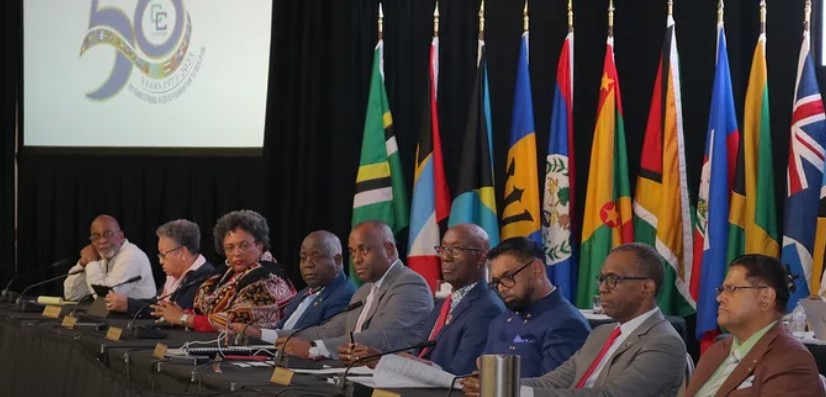
A deepening diplomatic rift among Caribbean Community (CARICOM) leaders reveals alarming fractures within the regional bloc, exposing fundamental weaknesses in its governance structure. The current tensions—stemming from divergent positions on Venezuela relations, responses to US military presence in Caribbean waters, and recent US visa restrictions affecting Antigua and Barbuda and Dominica—highlight a critical juncture for the organization.
The public exchange between Antigua and Barbuda’s Prime Minister Gaston Browne and Trinidad and Tobago’s Prime Minister Kamla Persad-Bissessar transcends mere diplomatic sparring. It reflects broader systemic failures that have plagued CARICOM since its 1973 establishment through the Treaty of Chaguaramas. Originally conceived to foster economic integration, coordinate foreign policy, and promote functional cooperation among newly independent states, the community now grapples with inconsistent implementation, poor coordination, and perceptions of political interference in domestic affairs.
Historical context reveals this crisis has been decades in the making. The 1989 Grand Anse Declaration that launched the CARICOM Single Market and Economy (CSME) has yielded uneven results, with persistent barriers to labor mobility and divergent national regulations. The seminal 1992 West Indian Commission report ‘A Time for Action’ identified these structural weaknesses, yet most challenges remain unresolved today.
Subsequent reviews, including a 2012 examination of the CARICOM Secretariat and Jamaica’s Golding Report, documented identical problems: weak compliance mechanisms, implementation failures, and an intergovernmental model lacking enforcement authority. These reports recommended stronger institutional processes and decision-making efficiency but were never formally adopted.
Current tensions reflect growing perceptions of imbalance within the community. Many observe disproportionate benefits flowing to Trinidad and Tobago compared to Organization of Eastern Caribbean States (OECS) members, while development gaps widen between resource-rich Guyana and less developed CARICOM nations. These disparities, compounded by resource limitations at the Secretariat and policy coordination gaps, have eroded mutual trust.
The situation mirrors challenges faced by other integration projects. The European Union’s experience with internal divisions during the financial crisis and Ukraine conflict led to comprehensive structural assessments. CARICOM now requires a similarly candid independent evaluation addressing competitiveness, governance, and equity concerns while reaffirming commitments to mutual respect and non-interference.
As CARICOM approaches its 50th anniversary, the organization must confront its structural limitations or risk the fate of the failed West Indies Federation. The warning of Dr. Eric Williams—’one from ten leaves nought’—serves as a poignant reminder that without genuine unity, regional integration remains an unfulfilled promise.