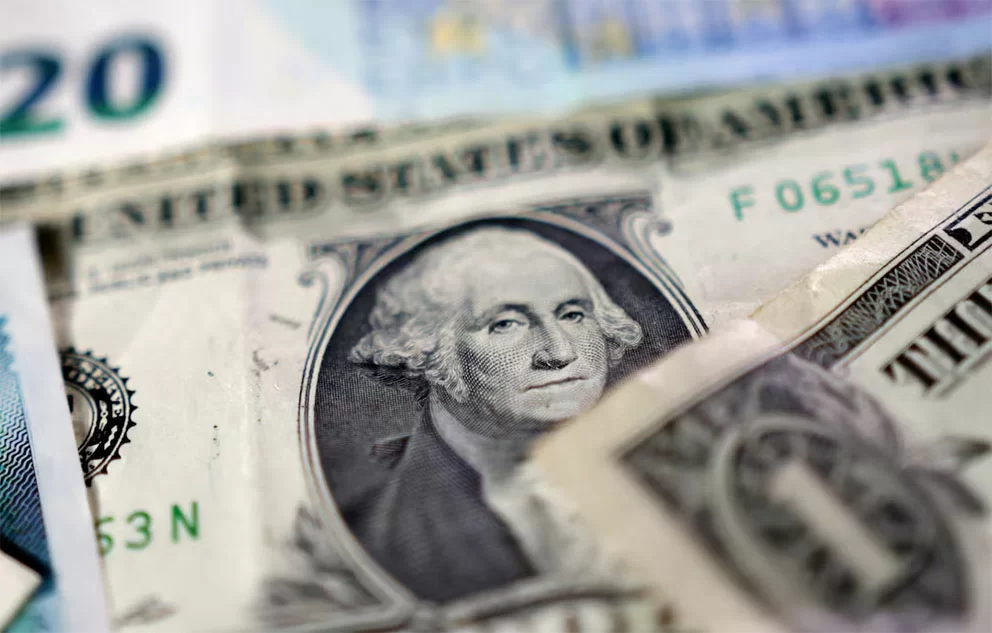
The US dollar is experiencing sustained pressure and appears poised to record its most significant annual decline since 2017, with analysts anticipating potential further depreciation in the coming months. This downward trajectory persists despite recent robust US growth indicators, as investors increasingly expect the Federal Reserve to implement additional interest rate cuts throughout 2026 while other major central banks maintain their current policy stances.
Financial markets have responded decisively to this anticipated policy divergence. The euro and British pound both reached three-month highs against the dollar, trading at approximately $1.180 and $1.352 respectively. The dollar index, which measures the currency’s performance against a basket of major counterparts, fell to a 2.5-month low of 97.767. Year-to-date, the greenback has depreciated nearly 9.8%, marking its most substantial annual decline in eight years. Should this weakness persist through the final trading week, 2025 could represent the dollar’s worst performance since 2003.
This year’s currency volatility has been exacerbated by ongoing trade tensions and unpredictable policy influences from the Trump administration, which have simultaneously raised concerns about the Federal Reserve’s operational independence. In contrast, the euro has appreciated over 14% this year, positioning itself for its strongest annual performance in more than two decades.
The European Central Bank maintained its current interest rate structure last week while upgrading growth projections, effectively ruling out near-term policy easing. Market pricing now indicates minimal expectations for ECB rate increases in 2026, mirroring similar projections for Australia and New Zealand. Both Antipodean currencies have strengthened considerably this year, with the Australian dollar reaching a three-month high of $0.6710 and the New Zealand dollar achieving a 2.5-month peak at $0.58475.
The British pound has gained over 8% year-to-date as markets price in at least one Bank of England rate cut during the first half of 2026, with approximately 50% probability assigned to a second reduction later in the year.
Smaller European currencies with traditionally strong fiscal positions have outperformed notably. The dollar has declined 12% against the Norwegian krone, 13% against the Swiss franc (which traded at 0.7865 francs Wednesday), and 17% against the Swedish krona, which reached its lowest level since early 2022 at 9.167 kroner.
Market attention remains particularly focused on the Japanese yen, where traders are monitoring potential intervention by Japanese authorities to stem the currency’s decline. Finance Minister Satsuki Katayashi stated Tuesday that Japan retains readiness to intervene against excessive yen movements—the strongest verbal warning to date. The yen subsequently appreciated 0.3% to 155.83 per dollar on Wednesday following previous day’s 0.5% decline.
Despite the Bank of Japan implementing its long-awaited rate increase last week, Governor Kazuo Ueda’s cautiously dovish messaging disappointed market participants hoping for more aggressive tightening measures. With year-end liquidity conditions thinning, some investors anticipate potential official buying operations to support the yen, potentially creating favorable conditions for intervention by Japanese authorities.