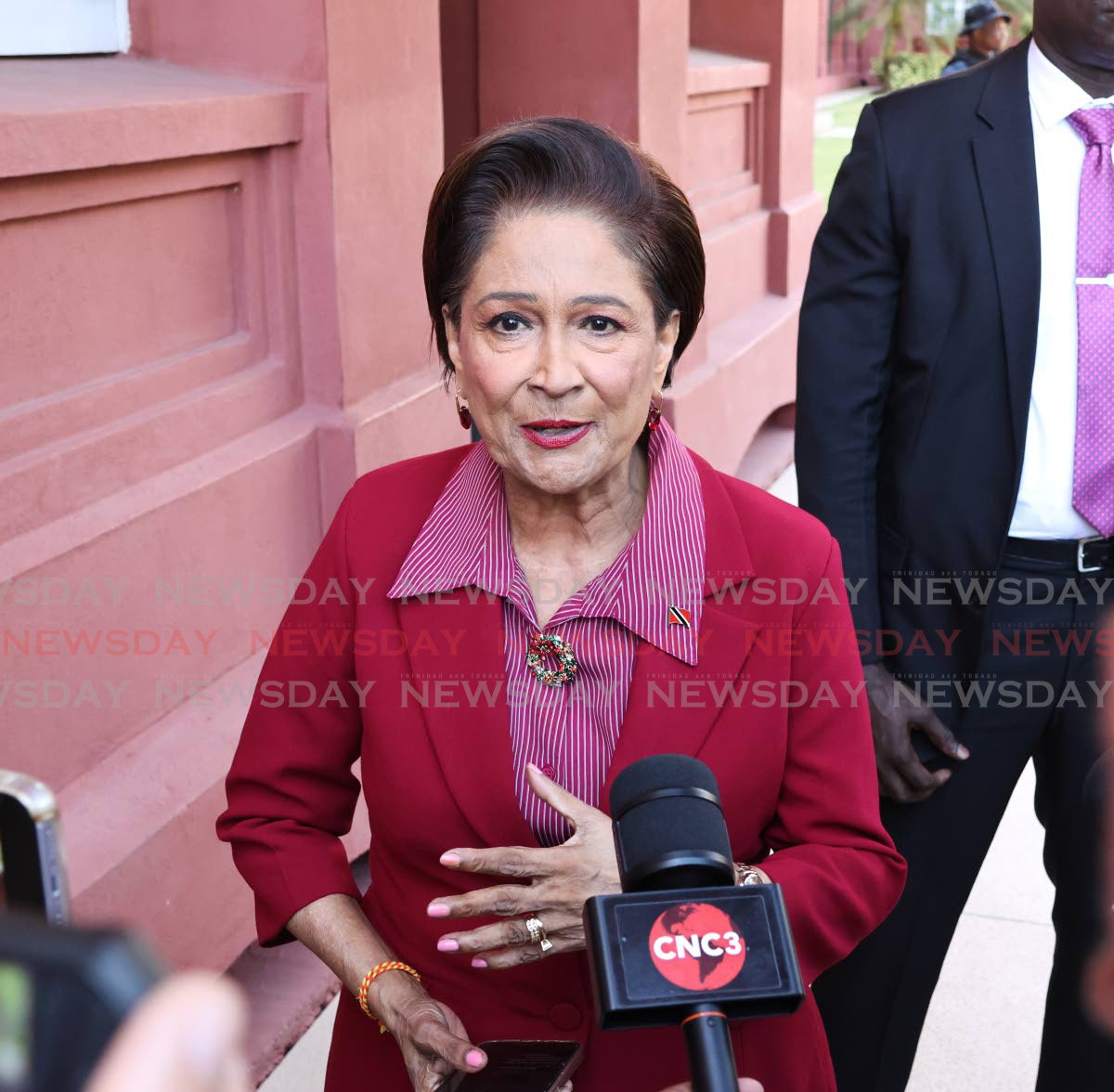
Prime Minister Kamla Persad-Bissessar of Trinidad and Tobago has ignited a firestorm of controversy by asserting that the United States possesses an unquestionable right to pursue its national interests—even when such actions adversely affect other sovereign nations—and that impacted countries must simply “accept the consequences.” While presented as a tough stance, legal experts contend this position is not only legally flawed but dangerously reckless for a small nation state.
The core of the dispute centers on fundamental principles of international law. Sovereignty, contrary to the Prime Minister’s characterization, has never equated to unlimited freedom. Since the establishment of the post-1945 global legal order, sovereignty has existed within a framework designed to restrain powerful nations and protect vulnerable ones. The longstanding principle, repeatedly affirmed by the International Court of Justice, is that the freedom of any state ends where another’s begins.
Actions such as economic coercion, extraterritorial punishment, and policy intimidation are not legitimate expressions of sovereignty but rather violations of it. The editorial argues that if powerful nations could freely impose their preferences on others based solely on might, international law would be rendered meaningless, replaced by pure hierarchy.
The specific context involves U.S. criticism of Citizenship-by-Investment (CBI) programs. The contention is not whether the U.S. can regulate its own borders—a right acknowledged as undisputed—but whether it can penalize other countries for domestic policies that breach no international treaty or convention. This is framed not as legitimate border control but as interference disguised as security.
In contrast to the Prime Minister’s stance, the Caribbean Community (CARICOM) delivered a response described as orthodox, restrained, and legally sound. CARICOM recognized U.S. sovereignty while formally requesting consultation, clarity, and respect for the rule of law. This approach is presented as the prescribed method for small states to navigate a rules-based international system.
The editorial expresses particular alarm that this doctrine originates from a Prime Minister who holds the title of Senior Counsel, a position that should demand a higher standard of legal reasoning. The author condemns the underlying logic as “profoundly defective,” where sovereignty is mischaracterized as an unlimited license, coercion is rebranded as mere consequence, and international law is treated as optional etiquette.
The author concludes with a stark warning: if the Prime Minister’s doctrine were correct, Trinidad and Tobago would itself have no protection against sanctions, blacklists, or financial pressure whenever it became inconvenient to more powerful nations. The piece ends with a powerful admonition: “Sovereignty is not a doormat. And TT should stop pretending that being trampled is a sign of strength.”