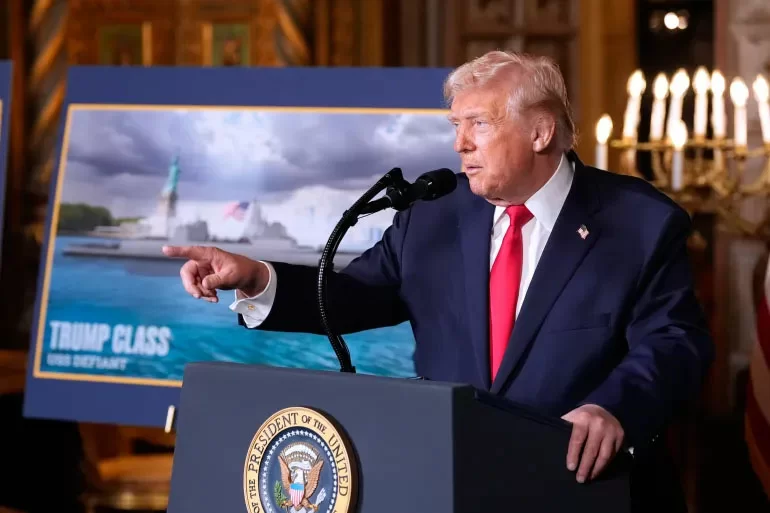
President Donald Trump has issued a stark warning to Venezuelan leader Nicolás Maduro during a press briefing at his Mar-a-Lago resort in Florida, suggesting it would be “wise” for Maduro to step down amid escalating tensions. The December 22nd address, attended by Secretary of State Marco Rubio and Defense Secretary Pete Hegseth, signaled Washington’s readiness to intensify pressure on Caracas following months of heightened diplomatic strain.
Trump explicitly stated that removing Maduro from power remains an objective, warning that “if he plays tough, it will be the last time he gets to do so.” Simultaneously, the U.S. Coast Guard continues pursuing a third oil tanker from Venezuela’s alleged “shadow fleet” used to circumvent American sanctions. The president confirmed the retention of previously seized vessels containing nearly 4 million barrels of Venezuelan oil, indicating potential options including sale, retention, or allocation to strategic reserves.
Maduro responded through state television with a counterattack, urging Trump to address domestic economic and social issues rather than threatening Caracas. The exchange occurs alongside increased U.S. military operations in the region under drug interdiction missions, with over two dozen attacks on suspected drug smuggling operations resulting in more than 100 fatalities—actions whose legality has been questioned by critics.
The escalating crisis prompted an emergency United Nations Security Council meeting convened at Venezuela’s request with Russian and Chinese support. Russian Foreign Minister Sergei Lavrov expressed “profound concern” over U.S. operations in the Caribbean, warning of risks to regional stability and international shipping while reaffirming Moscow’s support for Maduro’s government.
China condemned American actions as “serious violations of international law,” emphasizing Venezuela’s right to independent development through its Foreign Ministry spokesperson. Venezuelan Foreign Minister Yvan Gil presented Maduro’s letter to the UN, warning that U.S. blockade measures would disrupt global oil and energy supplies, particularly affecting vulnerable nations across Latin America and the Caribbean.