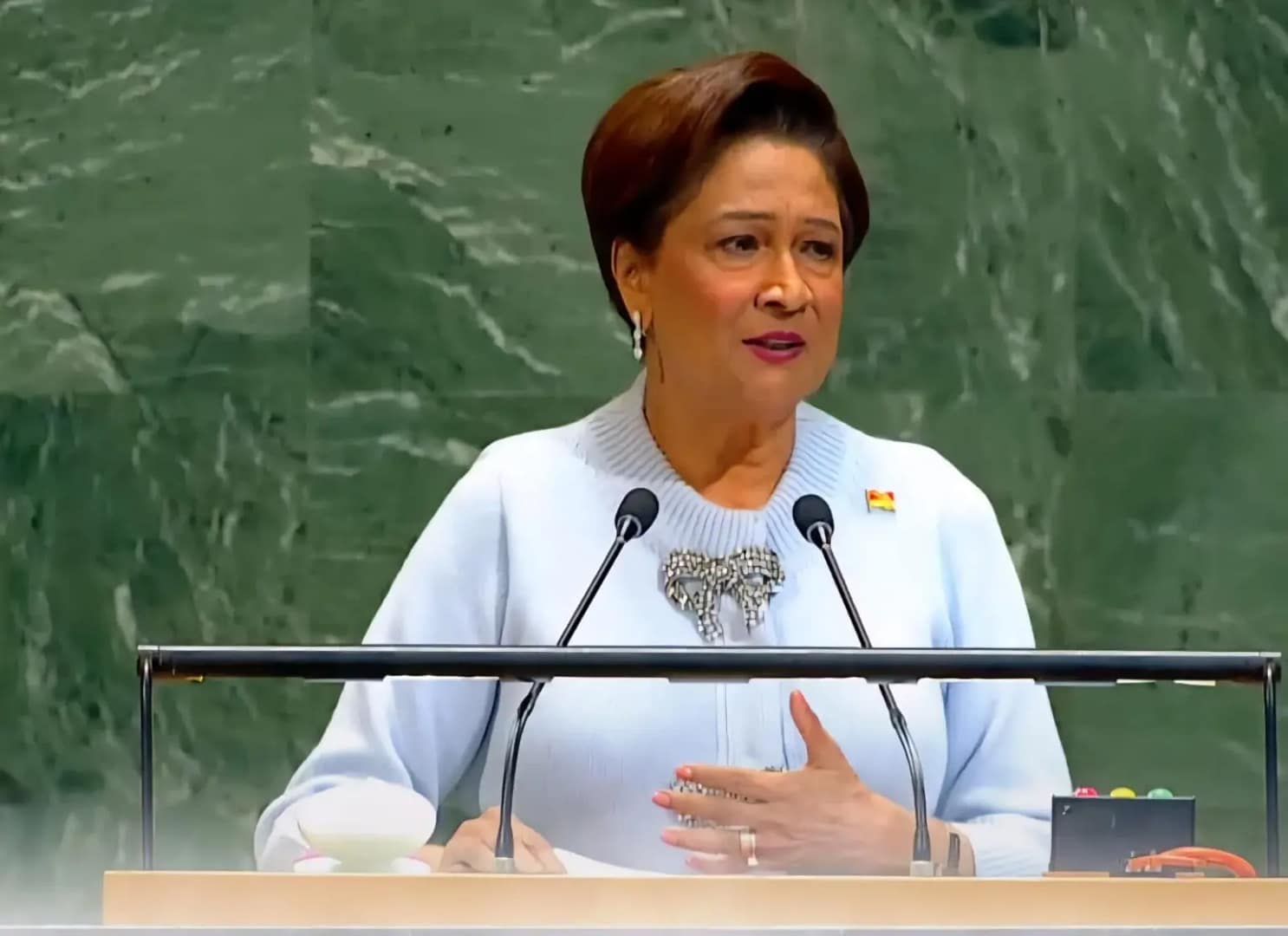
A significant diplomatic confrontation has emerged within the Caribbean Community (CARICOM) as Trinidad and Tobago’s Prime Minister Kamla Persad-Bissessar launched a scathing critique against regional leadership and their perceived alignment with Venezuela’s government. The political firestorm ignited when Persad-Bissessar directly challenged Antigua and Barbuda Prime Minister Gaston Browne to address U.S. visa restrictions affecting his citizens rather than engaging in regional diplomacy.
In a striking departure from CARICOM’s unified stance, the Trinidadian leader accused the regional bloc of effectively supporting the administration of Venezuelan President Nicolás Maduro, whom she characterized as presiding over a regime responsible for the imprisonment and elimination of thousands of political opponents. Persad-Bissessar specifically rejected CARICOM’s official ‘zone of peace’ policy, describing it as a strategic façade designed to remove American military presence from the Caribbean region, thereby enabling Maduro’s continued hold on power.
The Prime Minister further highlighted escalating regional security concerns, referencing Venezuela’s persistent territorial claims against Guyana and recent statements suggesting Trinidad and Tobago might be considered Venezuelan territory. These developments, according to Persad-Bissessar, demonstrate clear security threats that CARICOM has failed to adequately address through its current diplomatic approach.
Emphasizing national sovereignty over regional consensus, Persad-Bissessar stated her primary obligation remains protecting Trinidad and Tobago’s citizens rather than maintaining diplomatic harmony within CARICOM. The organization has yet to issue an official response to these allegations, which represent one of the most significant public challenges to CARICOM’s unified diplomatic position in recent years. This confrontation occurs amid ongoing tensions between Caribbean nations and the United States regarding regional security cooperation and immigration policies.