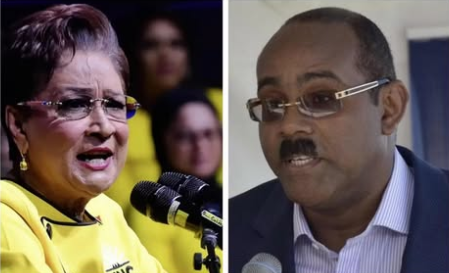
A significant diplomatic dispute has emerged between Caribbean leaders following critical remarks by Trinidad and Tobago’s Prime Minister about regional cooperation. Prime Minister Kamla Persad-Bissessar of Trinidad and Tobago declared the Caribbean Community (CARICOM) “not a reliable partner at this time,” characterizing the organization as dysfunctional and self-destructive in its current operations.
In a robust response, Antigua and Barbuda’s Prime Minister Gaston Browne issued a comprehensive rebuttal, challenging these assertions with substantial economic data and emphasizing CARICOM’s historical significance. Browne presented compelling trade statistics demonstrating Trinidad and Tobago’s substantial economic benefits from regional integration, revealing that the nation earned over US$1.1 billion in foreign exchange from CARICOM trade during 2024 alone.
The economic relationship shows remarkable imbalance in Trinidad and Tobago’s favor, with the country maintaining the largest merchandise trade surplus within CARICOM and consistently recording positive trade balances since the organization’s establishment in 1973. Browne highlighted how this advantageous position has been facilitated through protective measures including the Common External Tariff (CET), through which member states collectively forwent approximately US$142.7 million in customs revenue during 2024 to support Trinidad’s manufacturing sector.
Beyond economic cooperation, Browne emphasized CARICOM’s crucial role in regional security, particularly in addressing Trinidad and Tobago’s challenges with organized crime through intelligence sharing and coordinated law-enforcement initiatives.
The controversy originated from Persad-Bissessar’s criticism of CARICOM’s position regarding U.S. travel restrictions imposed on Antigua and Barbuda and Dominica, which Washington subsequently suspended. The Trinidad leader distanced her government from CARICOM’s collective stance, asserting every sovereign state must accept consequences for its policy choices.
Browne firmly rejected Persad-Bissessar’s suggestion that Antigua and Barbuda had “bad-mouthed” the United States, stating “no evidence has been offered because none exists.” He emphasized his nation’s record of close collaboration with Washington on security, immigration, and multilateral cooperation while maintaining commitment to Caribbean integration.
The exchange reveals deepening divisions within CARICOM regarding foreign policy alignment and organizational effectiveness, with Persad-Bissessar warning of “widening fissures” beneath the “thin mask of unity” that could lead to institutional implosion if left unaddressed.