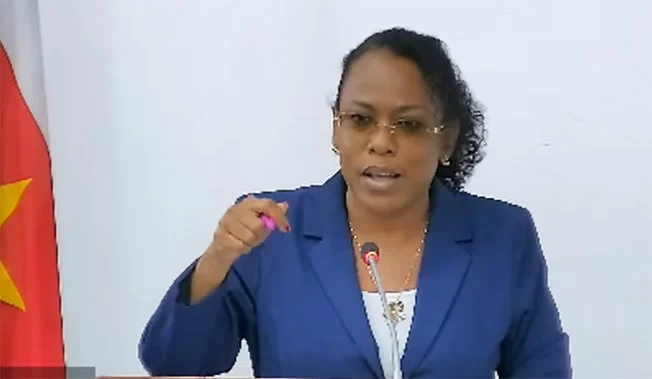
Suriname’s National Assembly witnessed intense parliamentary debate on Friday regarding the proposed Sustainable Nature Management Act, with widespread concerns about legislative preparation, institutional power imbalances, and inadequate protection for indigenous communities.
The contentious legislation, designed to replace the outdated 1954 Nature Conservation Act, faced scrutiny from multiple parliamentary factions. Rossellie Cotino (NDP), chair of the rapporteurs committee, acknowledged Suriname’s need for modern environmental legislation to maintain its status as a heavily forested nation with minimal deforestation. However, she highlighted significant flaws in the current proposal.
Central to the criticism was the concerning concentration of power within the National Environmental Authority (NMA). Cotino and other assembly members questioned why the legislation didn’t instead strengthen the existing Forest Management Agency (LBB) and establish clear management under a single organization. This overlap, critics warned, could create operational tension between LBB and NMA.
Additional concerns included insufficient coordination with existing legislation such as the Hunting Act and Animal Protection Act, and the unusual absence of specified ministerial responsibility for implementation—a standard provision typically included in final provisions.
Jerrel Pawiroredjo (NPS faction leader) emphasized that legislation shouldn’t be rushed, even with potential external funding at stake. International environmental organizations have pledged $20 million for sustainable projects, contingent on proper legislation. Parliamentary members, including Assembly President Ashwin Adhin, unanimously asserted that parliament wouldn’t be pressured by external factors.
The legislation’s treatment of indigenous rights emerged as another critical issue. Jennifer Vreedzaam (NDP) delivered sharp criticism regarding the inadequate implementation of the Free, Prior and Informed Consent (FPIC) principle, noting that parliament had recently extensively debated the importance of consultation with indigenous and tribal peoples. She emphasized that FPIC represents a fundamental legal principle rather than optional consultation.
Tashana Lösche (NDP) noted that while the law references areas traditionally used by indigenous and tribal communities, it fails to specify their exact locations or establish formal boundary demarcation. Steven Reyme (A20) questioned why the proposal doesn’t explicitly recognize collective land and usage rights, despite Suriname’s international obligations.
One of the initiative’s proponents, Wedperkash Joeloemsingh (NDP), acknowledged during consultations that the law requires amendments and thanked members for their critical contributions. He emphasized that the legislation wasn’t intended as rushed work and wasn’t related to financial considerations, but rather aimed to establish clear responsibility allocation.
The session has been adjourned until Monday for further deliberation.