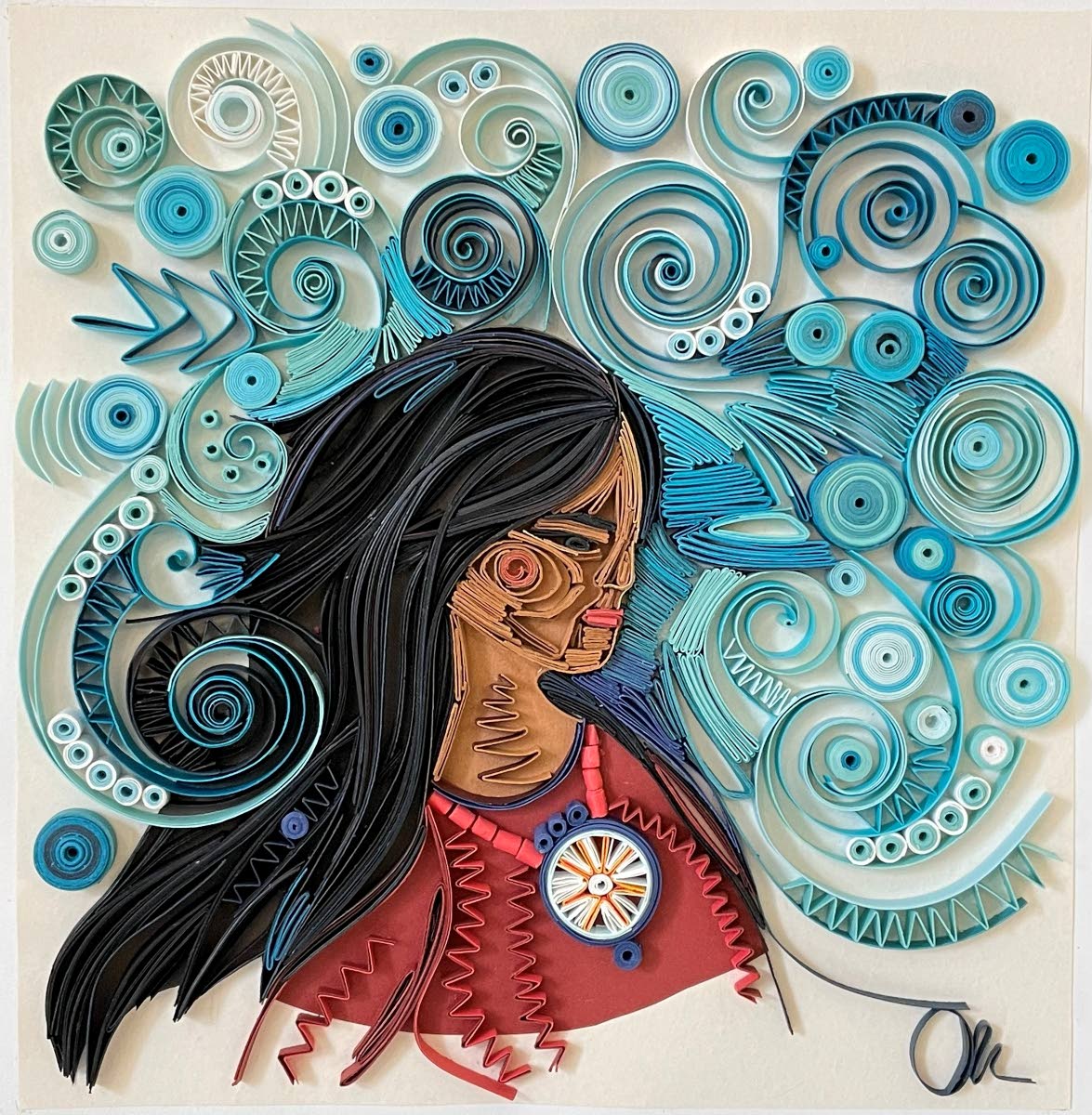
In an extraordinary fusion of technology and tradition, Toronto-based software engineering manager Allisha Ali has emerged as an unexpected force in the art world through her innovative paper-quilling techniques. Born in Trinidad and migrating to Canada at age ten, Ali has developed a distinctive artistic practice that transforms colored paper strips into vibrant visual narratives of Caribbean heritage and personal memory.
Without formal art training, Ali discovered paper artistry as therapeutic expression during intervals between managing tech teams and raising her two daughters. Her unconventional medium involves meticulously layering and blending paper strips to create textured compositions that mimic brushstrokes—all without using any paint. “Just glue and paper,” Ali explains. “I have stacks of different colors and I blend them. It’s very tactile, very therapeutic.”
Her engineering background profoundly influences her creative process. She describes her approach as “modular,” constructing artworks from individual components much like software systems are designed. This methodological crossover demonstrates how her technical expertise informs her artistic vision.
At the heart of Ali’s work lies her Trinidadian roots and family history. Her breakthrough piece, “Oropouche,” depicts cocoa pods connected to her father’s lineage and the agricultural legacy of northeastern Trinidad. The artwork emerged from a deeply personal journey—returning to Trinidad seven years after her father’s death. “There was a lot of emotion in that trip—grief, nostalgia, joy,” she recalls. “I always think of Trinidad as paradise, but it’s layered.”
Another significant work, “Bazodee,” captures the overwhelming experience of returning to bury her father, transitioning visually from anxiety to intense emotional release. Her portfolio has expanded to include socially conscious works like “The Water Protector,” honoring Indigenous water activists in Canada, and “Soul Rebel,” a portrait of Bob Marley that pays homage to the music that filled her childhood home.
Despite recent recognition—including her first sale after someone discovered her work on Instagram and her inaugural exhibition in the Greater Toronto Area—Ali maintains her full-time tech career. She now aims to participate in juried exhibitions and eventually stage a solo show, all while continuing to develop more complex, message-driven works that create space for Caribbean stories in Canadian cultural spaces.