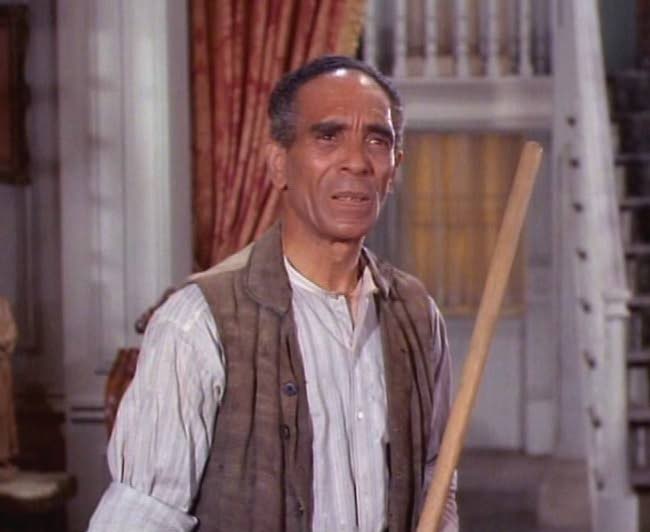
Despite achieving near-total obscurity in his native Trinidad and Tobago, Kenneth Renwick (1907-1993), professionally known as Ken Renard, forged one of the most remarkable and prolonged acting careers among Caribbean-born performers. His journey from tire retreading laborer in Harlem to celebrated Broadway and Hollywood actor represents an extraordinary narrative of artistic perseverance amid racial barriers.
Renard’s immigration records confirm his 1923 arrival in the United States from Port of Spain, where he initially worked in industrial jobs before discovering theater. His breakthrough came during the twilight of the Harlem Renaissance, performing with the Lafayette Theatre’s productions of ‘Sailor Beware’ and ‘The Front Page’ in 1935. This led to his involvement with the historically significant Federal Theatre Project, where he performed under Orson Welles’ direction in the legendary ‘Voodoo Macbeth’ (1936) and was cast as Emperor Haile Selassie in the controversially canceled ‘Ethiopia’ production.
His career trajectory defied racial conventions of the era, transitioning from Harlem stages to Broadway productions throughout the 1940s-50s, including Jean-Paul Sartre’s ‘The Reluctant Prostitute.’ Renard simultaneously established himself in radio dramas for major networks like CBS and NBC before breaking into cinema with black-cast musicals like ‘Murder with Music’ (1948).
Renard’s cinematic significance culminated in his dignified portrayal of Haitian revolutionary leader Toussaint Louverture in ‘Lydia Bailey’ (1952), marking his transition to substantial Hollywood roles. Throughout the 1960s-80s, he appeared alongside icons including Sidney Poitier (as his father in ‘Something of Value’), Jane Fonda, and Marlon Brando while accumulating over twenty film credits and dozens of television appearances. His versatility shone through westerns (‘Bonanza’, ‘The Virginian’), legal dramas (‘Perry Mason’), espionage thrillers (‘Mission: Impossible’), and science fiction (‘The Outer Limits’).
Despite confronting limited opportunities for Black actors—noted in his 1960 interview with The New Pittsburgh Courier—Renard mastered diverse ethnic roles including Latin, Native American, and African characters. His legacy remains preserved at the California African American Museum in Los Angeles, housing photographs, theater programs, and personal memorabilia from his groundbreaking six-decade career. The single word engraved on his Los Angeles gravesite—’ACTOR’—encapsulates the identity he forged through relentless artistic dedication.