The European Union has postponed the signing of a landmark free trade agreement with South American nations following intense farmer protests and last-minute opposition from France and Italy. The EU-Mercosur pact, which would create one of the world’s largest free trade zones covering 780 million people and a quarter of global GDP, now faces uncertain prospects after 26 years of negotiations.
EU officials had anticipated finalizing the agreement this weekend in Brazil, but Commission spokeswoman Paula Pinho confirmed the delay until January. The decision emerged during emergency talks between European Commission President Ursula von der Leyen, European Council President Antonio Costa, and Italian Prime Minister Giorga Meloni, with Italy’s conditional support secured for January’s vote.
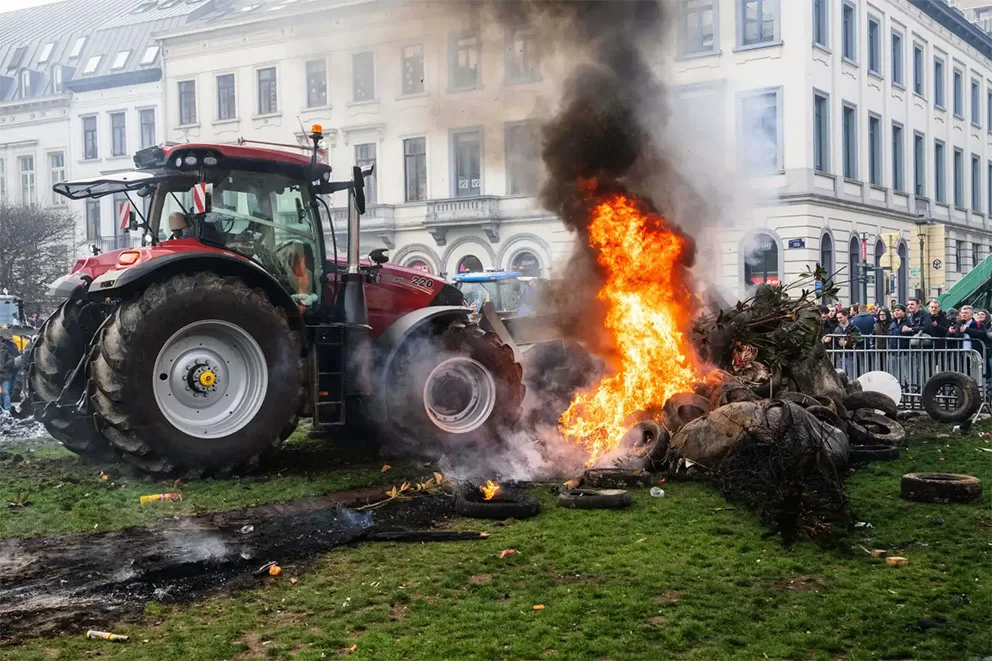
The postponement came hours after dramatic scenes unfolded in Brussels where hundreds of farmers from across Europe staged violent protests. Agricultural workers blocked streets with tractors, launched fireworks, and burned tires along with a symbolic coffin labeled “Agriculture.” Police responded with tear gas and water cannons as protesters threw potatoes and eggs, leading to the evacuation of European Parliament staff.
French President Emmanuel Macron emerged as the agreement’s most prominent critic, citing concerns about unfair competition for European farmers already struggling with high production costs and animal disease outbreaks. Macron’s centrist government, wary of growing far-right opposition, demands stronger safeguards including rigorous import inspections, pesticide restrictions in Mercosur countries, and mechanisms to prevent economic disruption.
Italian Premier Meloni called any immediate signing “premature,” insisting on adequate mutual guarantees for Italy’s agricultural sector. This opposition potentially gives France sufficient votes to veto the agreement, which requires support from two-thirds of EU members.
Proponents argue the pact represents a crucial geopolitical move that would counter Chinese influence in Latin America and provide alternatives to U.S. trade restrictions. German Chancellor Friedrich Merz warned that further delays would damage EU credibility in global trade policy. Agathe Demarais of the European Council on Foreign Relations noted the agreement’s strategic importance in preventing Latin American economies from moving closer to Beijing.
In South America, Brazilian President Luiz Inácio Lula da Silva expressed frustration over the delay, which undermines what he hoped would be a major diplomatic achievement ahead of next year’s elections. Both Lula and Argentina’s libertarian President Javier Milei remain committed to the agreement despite their political differences, viewing Mercosur as a spear rather than a shield in global trade relations.