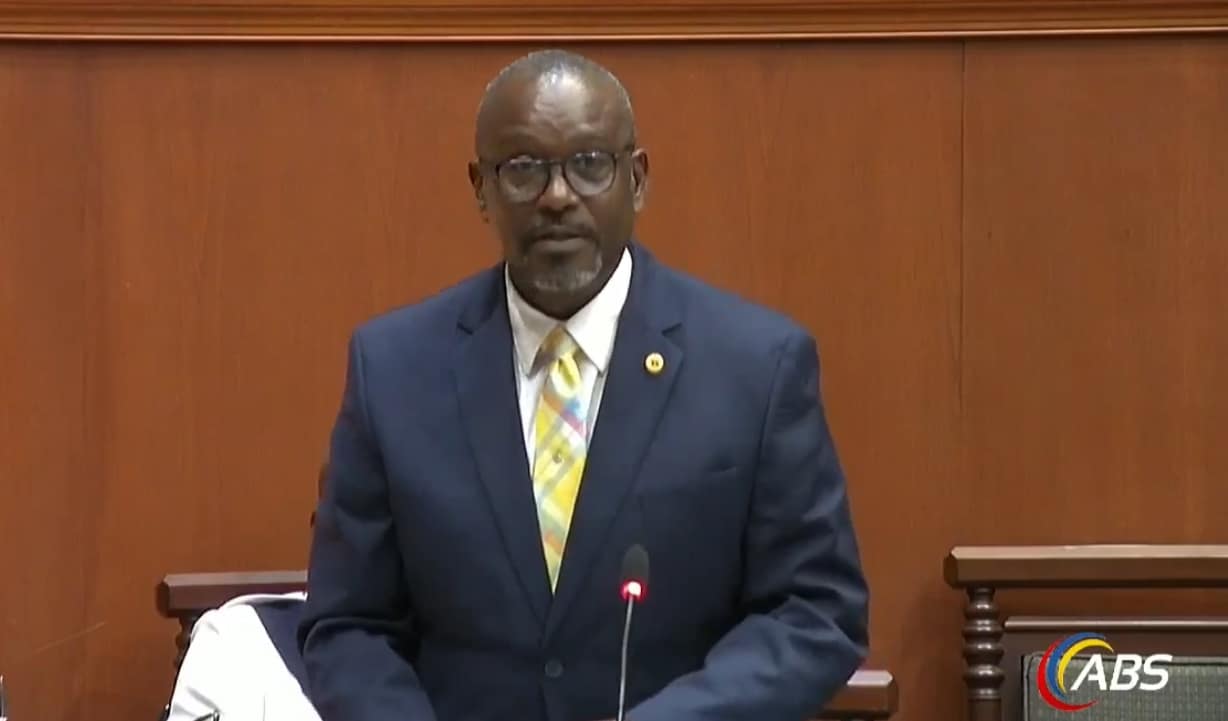
During Tuesday’s Senate deliberations on the Appropriation Bill, Minority Leader David Massiah delivered a pointed critique of the government’s 2026 budgetary framework, asserting its fundamental inadequacy in protecting society’s most vulnerable segments. The opposition leader contended that while the fiscal plan contains certain commendable components, it critically lacks comprehensive safeguards for low-income households, workers, and other at-risk demographics.
Massiah challenged the government’s fiscal narrative, questioning its relevance to citizens experiencing economic hardships, particularly when accounting for national debt obligations. “The government’s fiscal narrative depends on a surplus that disappears the moment debt repayments are included,” he stated, warning that this accounting approach potentially overstates the budget’s actual capacity to protect those in greatest need.
The senator emphasized the absence of clearly articulated strategies for household income support and social protection mechanisms, raising serious concerns about how projected economic growth would tangibly benefit vulnerable populations. From a labor policy perspective, Massiah found key pronouncements within the budget insufficiently substantiated, particularly those directly affecting workers and families.
While acknowledging some positive provisions within the estimates, Massiah maintained that they collectively fail to establish the necessary foundation for ensuring long-term socioeconomic security. He called for stronger, more targeted policy measures to prevent vulnerable groups from being marginalized within broader economic planning frameworks, urging legislators to evaluate the budget beyond superficial headline figures.
Concluding his address, Massiah reinforced the Senate’s constitutional responsibility to rigorously scrutinize whether national budgets genuinely serve those most in need, as debate on the 2026 budget continues in the Upper House.