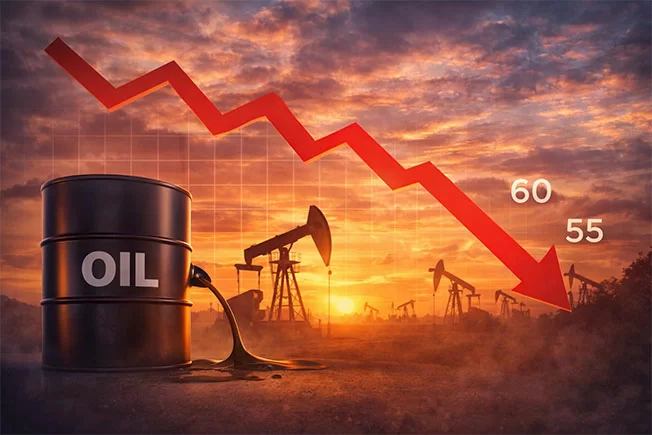
International oil markets experienced a significant downturn yesterday, with both Brent crude and West Texas Intermediate (WTI) facing substantial pressure due to mounting concerns about potential supply surpluses and weakening demand from major economies. The decline occurred despite a brief price spike following former U.S. President Donald Trump’s announcement regarding potential military action against Venezuela.
Brent crude futures fell below $60 per barrel while U.S. WTI oil traded around $55 per barrel, marking the lowest levels seen in several months. This downward trajectory follows emerging signals that global oil supply could outpace demand throughout 2026, creating a fundamentally bearish market environment.
Market analysts attribute the price collapse to multiple concurrent factors:
– Decelerating economic growth, particularly in China, which continues to suppress oil demand
– Rising non-OPEC+ production, especially from United States shale operations
– Geopolitical developments involving Russia and Ukraine that have heightened fears of additional supply entering markets
Recent economic indicators from both the United States and Europe further reinforced concerns about weakening industrial activity, subsequently deteriorating sentiment across oil markets.
Analytical projections suggest continued short-term volatility with a downward bias. Most experts agree that without clear production cuts from OPEC+ and with persistent demand weakness from China, the risk of further price deterioration remains substantial.
Market participants are preparing for several scenarios in 2026:
– Brent prices oscillating between $55-$65 per barrel range
– Ongoing tension between producers seeking market share and those prioritizing price stability
– Potential market interventions by OPEC+ should prices decline excessively
For oil-producing nations, the price decline translates to increased revenue uncertainty and potential budget pressures. Conversely, importing nations and consumers may experience relief from reduced fuel and energy costs. These market developments underscore the critical importance of prudent fiscal policies and avoiding overreliance on projected oil revenues, according to energy analysts.