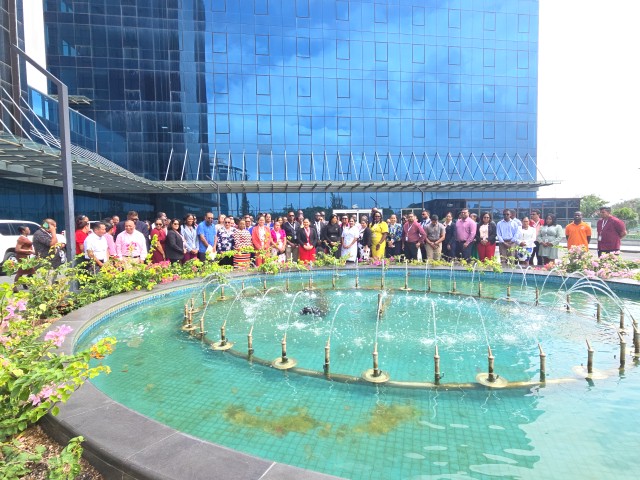
In a significant move to transform its educational landscape, Guyana’s Ministry of Education has officially inaugurated the National Education Leadership Academy (NELA), marking a pivotal step toward enhancing school leadership and institutional accountability. The launch ceremony at Pegasus Corporate Suites on December 15, 2025, gathered education officials and practitioners to witness what authorities describe as a cornerstone initiative for improving learning outcomes nationwide.
Chief Education Officer Saddam Hussain outlined an ambitious package of reforms scheduled for implementation in early 2026. These measures include reinstating teacher appraisals after a five-year hiatus, introducing performance report cards for all schools and regional education departments, and establishing a transparent school ranking system. ‘When there is a clamour for a particular school, then it’s based on the ranking and not necessarily what we think the good schools are,’ Hussain stated, emphasizing data-driven decision making.
NELA represents a collaborative effort funded by the Global Partnership for Education and the Inter-American Development Bank, with implementation support from UNESCO’s International Institute for Educational Planning. The inaugural cohort comprises 100 education professionals—including school administrators, education officers, and ministry staff—who will undergo comprehensive leadership training.
Complementing NELA’s launch, the ministry will soon introduce a Continuous Professional Development Policy alongside national teacher awards. Hussain explained this dual approach: ‘You have a system where teachers are held accountable but you also have a system where those who have excelled are rewarded for their efforts.’
The academy’s mandate extends beyond conventional training, encompassing research into systemic challenges and solutions for parental engagement, school attractiveness, and leadership development. Hussain highlighted the need for ‘independence of thought’ among education leaders, citing concerning examples where school administrators resisted basic responsibilities like operating water systems installed with IDB support.
Education Minister Sonia Parag addressed the gathering, noting that while infrastructure expansion—with over 100 schools built since 2020—and technological integration have improved access, transformational leadership remains crucial. ‘When this tier is strong, systems improve, teaching improves, learning improves and most importantly opportunity expands,’ Parag asserted, describing NELA’s mission to develop empathetic, ethical, and data-driven leaders.
The initial 100 participants will engage in an 18-month blended learning program combining theoretical instruction with practical applications in educational leadership, mentoring, and collaborative improvement strategies.