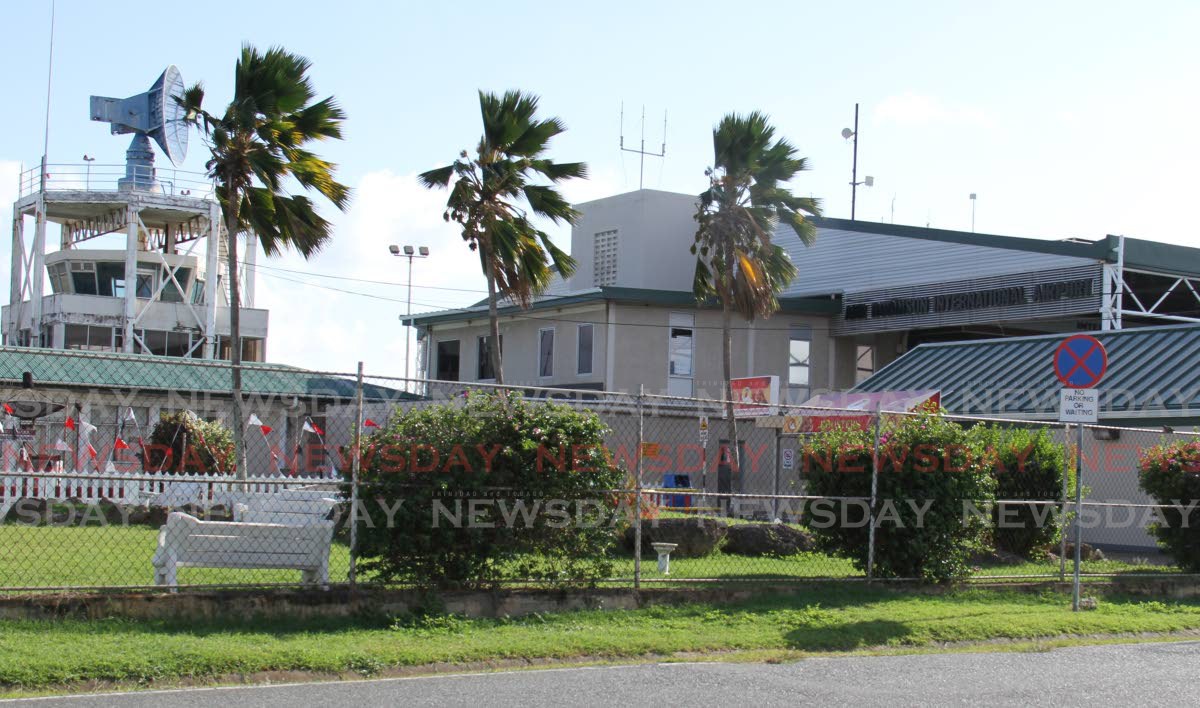
The Trinidad and Tobago government has formally authorized United States military aircraft to utilize Piarco International Airport and ANR Robinson International Airport for logistical operations in the coming weeks. This decision emerges within the broader context of the U.S. military’s expanded presence in the southern Caribbean, initiated in August, and aligns with Prime Minister Kamla Persad-Bissessar’s commitment to bilateral security cooperation.
The approval was confirmed by the Ministry of Foreign and Caricom Affairs on December 15, clarifying that the flights are for logistical support, including replenishment and routine personnel rotations. Foreign Minister Sean Sobers emphasized that this forms part of the ongoing, close engagement between the ministry and the U.S. Embassy in Port of Spain.
This development coincides with the recent publication of the U.S. National Security Strategy 2025, signed by President Donald Trump. The document outlines a renewed foreign policy approach termed the ‘Trump Corollary’ to the Monroe Doctrine, asserting a goal to ‘reassert and enforce American pre-eminence in the Western Hemisphere’ and deny strategic positioning to ‘non-hemispheric competitors.’
The bilateral cooperation has yielded tangible assets for Trinidad and Tobago, including the recent installation of an advanced AN/TPS-80 Ground/Air Task Oriented Radar (G/ATOR) system at the Tobago airport by U.S. Marines in November. Prime Minister Persad-Bissessar disclosed that this radar system has already aided in significant narcotics interdictions, citing a recent police seizure of $171 million worth of marijuana.
While the government frames this collaboration as essential for regional safety, drug interdiction, and enhanced surveillance capabilities, it has not been without domestic controversy. The political opposition, the PNM, has questioned the military presence and the specific placement of the radar in Tobago, claims the Prime Minister has rejected by alleging connections between the opposition and drug cartels.
The strategic U.S. deployment, which now includes an aircraft carrier strike group and nuclear submarines, originates from the ongoing territorial dispute between Venezuela and Guyana over the Essequibo region. Persad-Bissessar has stated Trinidad and Tobago would permit U.S. troop operations on its soil if Venezuela incurs into Guyana and a formal request is made under the existing Status of Forces Agreement (SOFA). This stance has created a divergence with other CARICOM leaders who advocate for the Caribbean to remain a ‘zone of peace.’