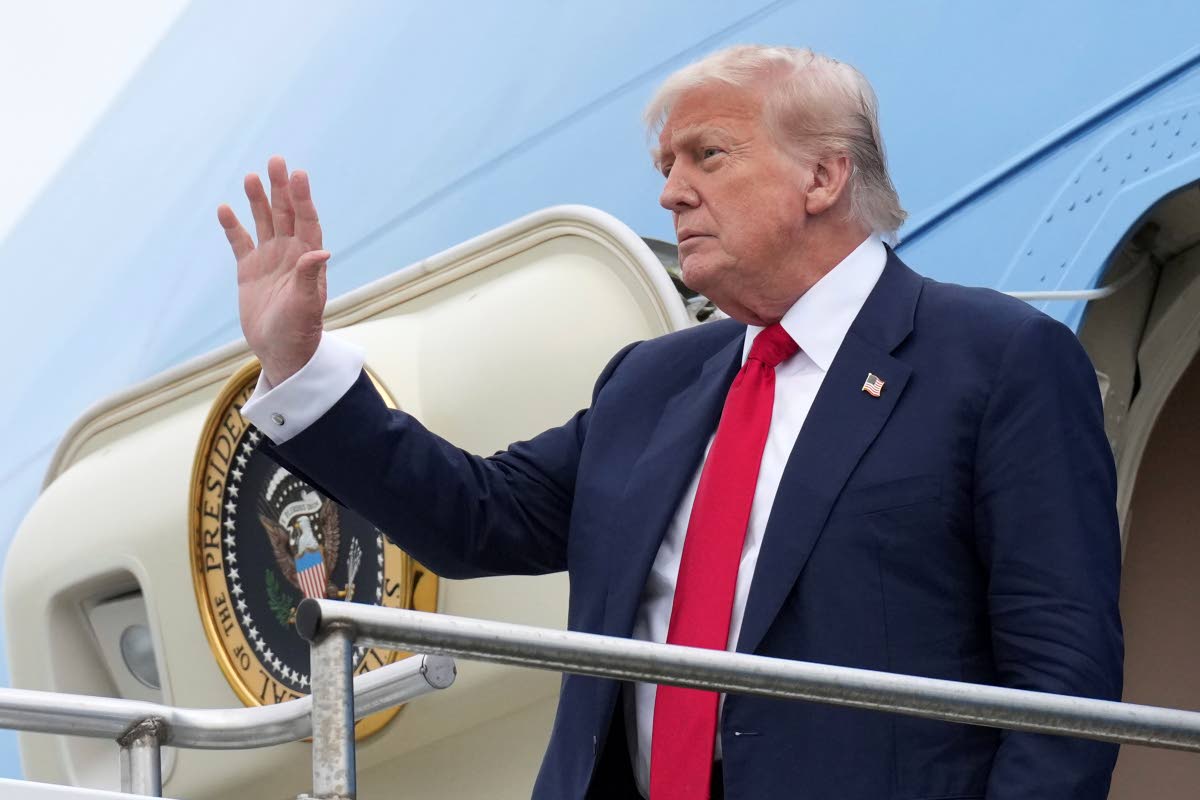
The United States has formally declared a strategic pivot to reclaim its historical dominance across the Western Hemisphere through a newly articulated foreign policy framework. This initiative, detailed in the National Security Strategy document signed by President Donald Trump and released by the White House, marks a significant shift from what it describes as ‘years of neglect’ in regional engagement.
Dubbed the ‘Trump Corollary’ to the Monroe Doctrine, the strategy aims to reinforce American pre-eminence by enlisting established regional allies to combat transnational threats, including narco-terrorism, cartels, and illegal migration. The document explicitly states intentions to deny non-hemispheric competitors—an apparent reference to global powers like China and Russia—the ability to position military assets or control strategic infrastructure in the region.
Geographically integral to this hemisphere, Trinidad and Tobago finds itself directly implicated in these developments. Prime Minister Kamla Persad-Bissessar has publicly endorsed the U.S. military presence, including the recent establishment of an advanced AN/TPS-80 radar system at the ANR Robinson International Airport. This system, capable of detecting aerial threats and monitoring maritime activity, has already aided local authorities in a significant drug bust valued at $171 million.
The U.S. strategy emphasizes cultivating partnerships with nations aligned with its principles, while not excluding governments with differing outlooks where shared interests exist. It also outlines considerations for targeted military deployments, including potential lethal force, to secure borders and control key transit routes. This approach has generated mixed reactions among Caribbean Community (CARICOM) leaders, with some, like Barbados Prime Minister Mia Mottley, expressing concerns over maintaining the region’s status as a ‘zone of peace.’
The policy publication follows a substantial U.S. military buildup in the southern Caribbean, featuring destroyers, a nuclear submarine, an aircraft carrier strike group, and Marine Expeditionary Units. This deployment, officially an anti-narcotic operation, has raised questions about sovereignty and extra-judicial actions after military strikes on alleged drug vessels.
Historical context adds complexity, as seen in Grenada’s cautious response to a U.S. request to host military radar. Prime Minister Dickon Mitchell remains deliberative, mindful of the 1983 U.S. invasion codenamed Operation Urgent Fury. The U.S. maintains that its revitalized doctrine is a ‘common-sense restoration of American power’ essential for regional stability and security.