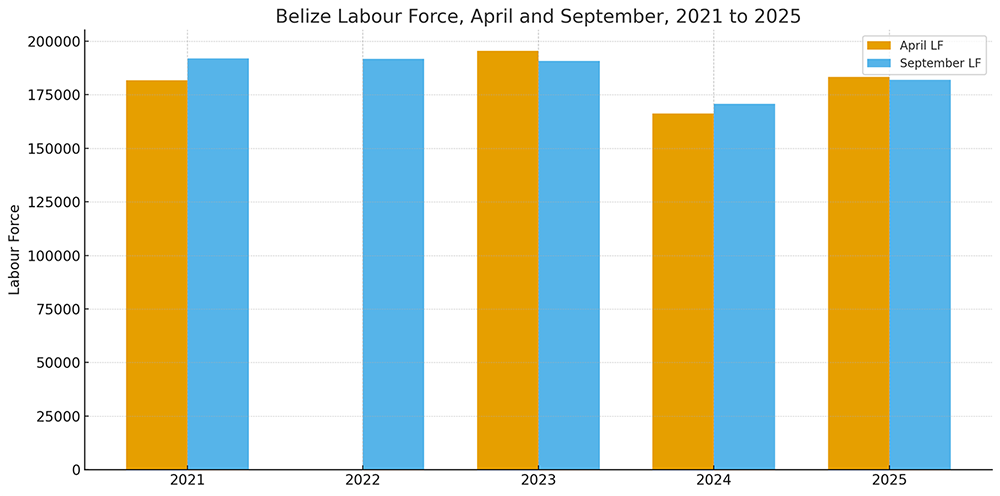
Belize’s official unemployment rate plummeted to a historic low of 1.9% in September 2025, yet this superficially robust figure masks significant structural vulnerabilities within the nation’s labor market. According to preliminary data from the national Labour Force Survey, merely 3,421 individuals were classified as unemployed—a figure that dips below the standard economic threshold for ‘full employment,’ typically ranging from 3% to 5%. While this suggests near-total workforce absorption, economists caution that the headline number obscures deeper complexities.
The survey reveals that from a total employed population of 178,442, a substantial proportion—64,129 workers or 35.9%—operate within the informal economy. These workers, largely concentrated in wholesale/retail trade and community/personal services, typically function without formal registration or social security protections. This prevalence of informal employment indicates widespread limitations in income security and job stability, despite their statistical classification as employed.
Further complicating the picture is underemployment, which affects 2,465 persons or 1.4% of the workforce. Although statistically modest, these individuals work fewer than 35 hours weekly despite availability for additional work and earn significantly below the national average income. Their situation highlights a segment of the labor force that remains economically constrained despite being technically employed.
Labor force participation rates, standing at 58.1%, also play a crucial role in interpreting the unemployment metric. With over 130,000 Belizeans outside the workforce due to household responsibilities, education, or other factors—and thus excluded from unemployment calculations—the reported rate fails to capture the full spectrum of labor market engagement. Significant gender disparities in participation further nuance this dynamic.
Collectively, Belize’s labor market indicators paint a multifaceted economic portrait. The record-low unemployment rate, while historically notable, coexists with substantial informal employment, persistent underemployment, and moderate participation rates. These factors necessitate careful monitoring to accurately assess both the quantity and quality of employment opportunities in Belize’s evolving economy.