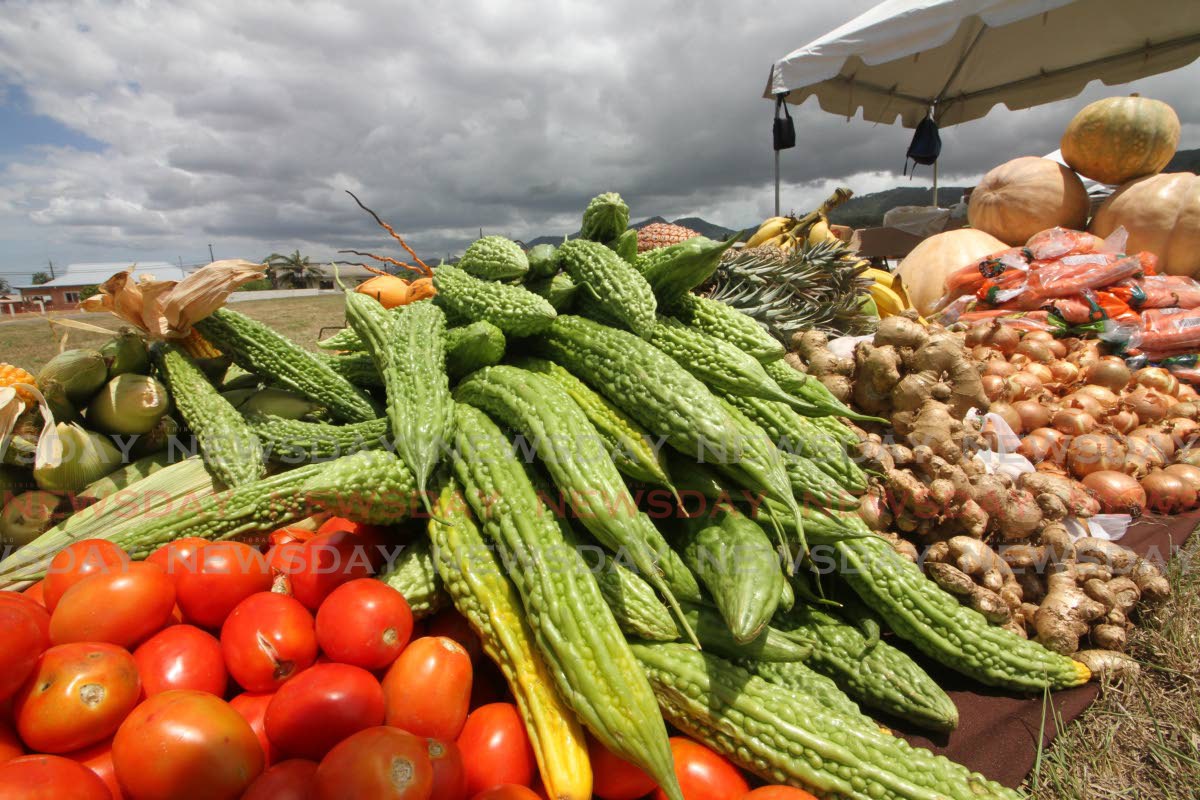
Trinidad and Tobago’s agricultural industry is experiencing sustained contraction despite abundant natural resources and emerging innovations, with official data revealing a 2.9% decline in the first quarter of 2025 following a 2.7% drop in the final quarter of 2024. This persistent downturn has simultaneously dragged down non-energy exports, which fell by 4.8% during the same period, raising concerns about the sector’s long-term viability as it continues to contribute only single-digit percentages to the national GDP.
In response to these challenges, the government has unveiled an ambitious strategy aiming to generate US$1 billion in agricultural export revenue. Agriculture Minister Ravi Ratiram recently announced plans to reactivate processing facilities nationwide, including the Brechin Castle Packing House and the substantial 3,000-square-foot Brickfield Packing House. This initiative follows the distribution of Brazilian dwarf coconut seedlings designed to rejuvenate the coconut industry.
At the ‘Exploring Opportunities with India’ seminar hosted by the India High Commission, Minister Ratiram pointed to India’s remarkable transformation from major food importer to global exporter as a model for Trinidad and Tobago’s aspirations. “TT is working to achieve this very shift—from raw production to processed and certified goods that can be exported, creating jobs, strengthening rural communities, and earning foreign exchange,” Ratiram stated.
The national strategy encompasses multiple approaches: strengthening food security through improved production systems and technology transfer, implementing climate-smart agriculture, modernizing farming via greenhouse technology and digital tools, enhancing water management, and expanding processing capabilities to develop new revenue streams and export opportunities.
Indian High Commissioner Dr. Pradeep Rajpurohit expressed strong confidence in Trinidad and Tobago’s agricultural potential, noting the country’s exceptionally fertile soil and favorable climate conditions. “I see that there is sizeable import of food commodities including fruits and vegetables, but living here I can tell you that TT has some of the most fertile soil and favorable weather for agriculture…the potential is immense,” Dr. Rajpurohit remarked. He specifically highlighted Julie mangoes, local pineapples, papaya, and even dragon fruit as products with significant export potential, suggesting that India could become a major market for these commodities, especially during winter months when certain produce becomes scarce.
The seminar, attended by dozens of agricultural stakeholders, also addressed critical systemic challenges. Farmers highlighted the absence of a local certification process for organic goods, which prevents Trinidad and Tobago from accessing premium export markets despite many practitioners already employing organic farming methods. Minister Ratiram acknowledged this limitation and expressed commitment to discussing solutions with India’s Agricultural and Processed Food Export Development Authority (APEDA).
Complementing these agricultural initiatives, the government has revealed comprehensive plans to modernize approximately 142 acres of port land, including upgrades to the Port of Spain, Galeota Mega Energy, and Point Lisas Industrial Port. The centerpiece of this infrastructure development is the proposed ‘Port City’—a major offshore cargo port on reclaimed land west of Port of Spain that will accommodate next-generation vessels and feature modern logistics systems, dry-dock facilities, expanded container-handling capacity, and climate-resilient infrastructure. These port enhancements are expected to significantly improve regional export capabilities through expanded berth capacity, deeper channels, and more efficient intermodal connections.
This multi-faceted approach forms part of the government’s broader revitalization blueprint aimed at creating 50,000 jobs through infrastructure upgrades and sector stimulation, representing a comprehensive effort to transform Trinidad and Tobago’s agricultural and export economy.