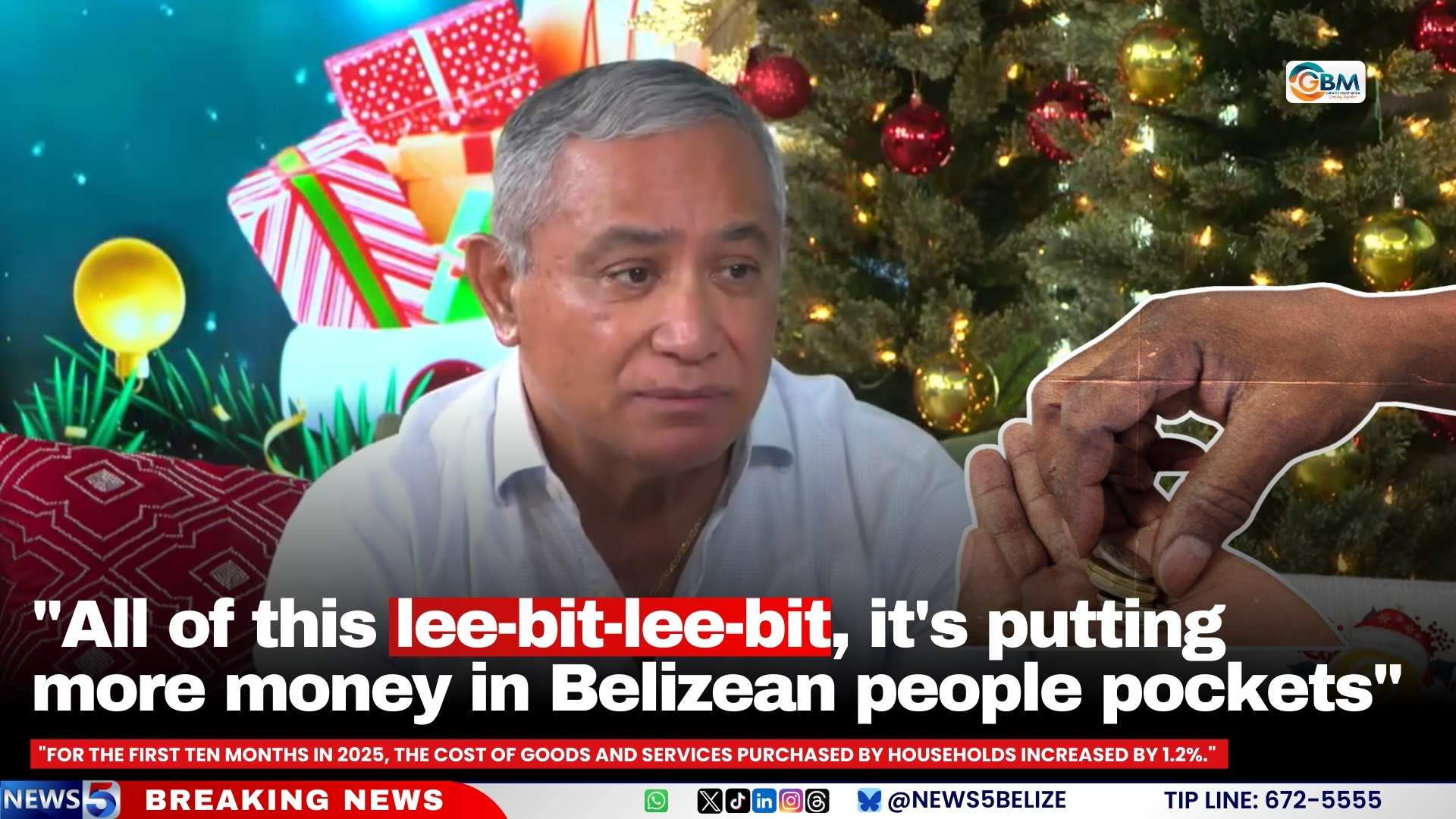
Belizean Prime Minister John Briceño has publicly countered opposition criticism regarding the nation’s escalating cost of living, defending his administration’s economic measures during a recent appearance on the ‘Open Your Eyes’ program. The United Democratic Party (UDP) has intensified its critique of government policies, claiming many citizens are experiencing severe financial strain from rising prices.
Prime Minister Briceño acknowledged the inflationary pressures affecting imported goods while emphasizing his government’s multifaceted approach to alleviate economic burdens on citizens. ‘We understand the issue of the cost of goods, but we do not have control of it. These goods are imported,’ Briceño stated, redirecting focus toward his administration’s proactive interventions.
The government’s economic relief strategy includes several key initiatives: implementation of a higher national minimum wage, expansion of scholarship programs, provision of meals for approximately 15,000 schoolchildren, and free education access for tens of thousands of students. Additionally, the administration has significantly broadened National Health Insurance coverage, now serving about 22,000 Belizeans at minimal cost.
Briceño highlighted targeted tax relief measures including GST-free weekends during Christmas and back-to-school periods, characterizing these incremental benefits as collectively ‘putting more money in Belizean people pockets.’
Contrasting this optimistic assessment, UDP Second Deputy Miguel Guerra presented a starkly different perspective during a press conference, asserting that everyday expenses—particularly grocery costs—have reached unsustainable levels for many households. Guerra emphasized that the cost of living crisis represents an urgent reality that cannot be overlooked by policymakers.
New data from Belize’s Statistical Institute indicates a 1.2% increase in household goods and services costs during the first ten months of 2025 compared to the same period in 2024, providing statistical context to the ongoing economic debate.