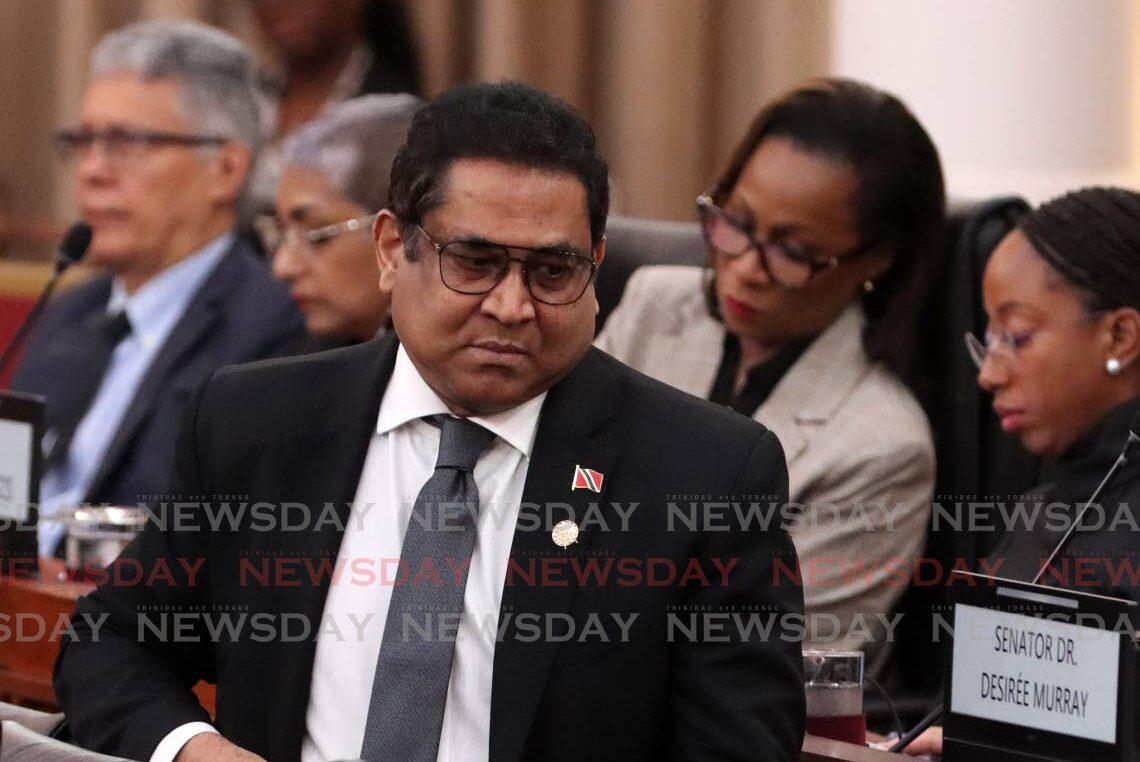
Opposition Senator Vishnu Dhanpaul, a former finance minister and permanent secretary in the finance ministry, has raised significant concerns regarding the government’s proposal to substantially increase Trinidad and Tobago’s external borrowing capacity. During Senate deliberations on the Finance Bill 2025 on December 9, Dhanpaul questioned the administration’s decision to elevate the statutory borrowing limit from $30.5 billion to $45 billion.
Dhanpaul emphasized that this borrowing threshold has remained unchanged through multiple administrations from both major political parties (PNM and UNC), serving as a crucial parliamentary safeguard. The established limit historically compelled governments to seek legislative approval and undergo opposition scrutiny for any borrowing exceeding the $30.5 billion cap.
The senator expressed apprehension that this substantial increase might be intended to finance the government’s recently launched Revitalisation Blueprint infrastructure initiative without adequate parliamentary oversight. He warned that unchecked borrowing could potentially lead Trinidad and Tobago toward requiring International Monetary Fund (IMF) intervention, reminiscent of the country’s economic challenges during the 1980s.
Dhanpaul clarified that while many nations carry larger public debts than Trinidad and Tobago, the critical factors are “the trajectory of the debt and the ability of a country to repay.” He noted that international credit rating agencies like Moody’s and Standard & Poors closely monitor these indicators when assessing national creditworthiness, suggesting the government’s approach “is making an excellent case to have this country downgraded.”
Additionally, Dhanpaul objected to provisions in the legislation that would transfer responsibility for official financial statistics from the Central Statistical Office (CSO) to the Central Bank. While expressly noting he imputed no improper motives to current Central Bank Governor Larry Howai, whom he described as “a gentleman,” Dhanpaul worried this change could potentially enable future politically-appointed governors to manipulate financial statistics. He advocated instead for establishing an independent national statistical institute as previously envisioned.
The senator further echoed opposition concerns regarding the appointment of non-public servants to the Board of Inland Revenue, granting them access to citizens’ confidential tax information without adequate safeguards.