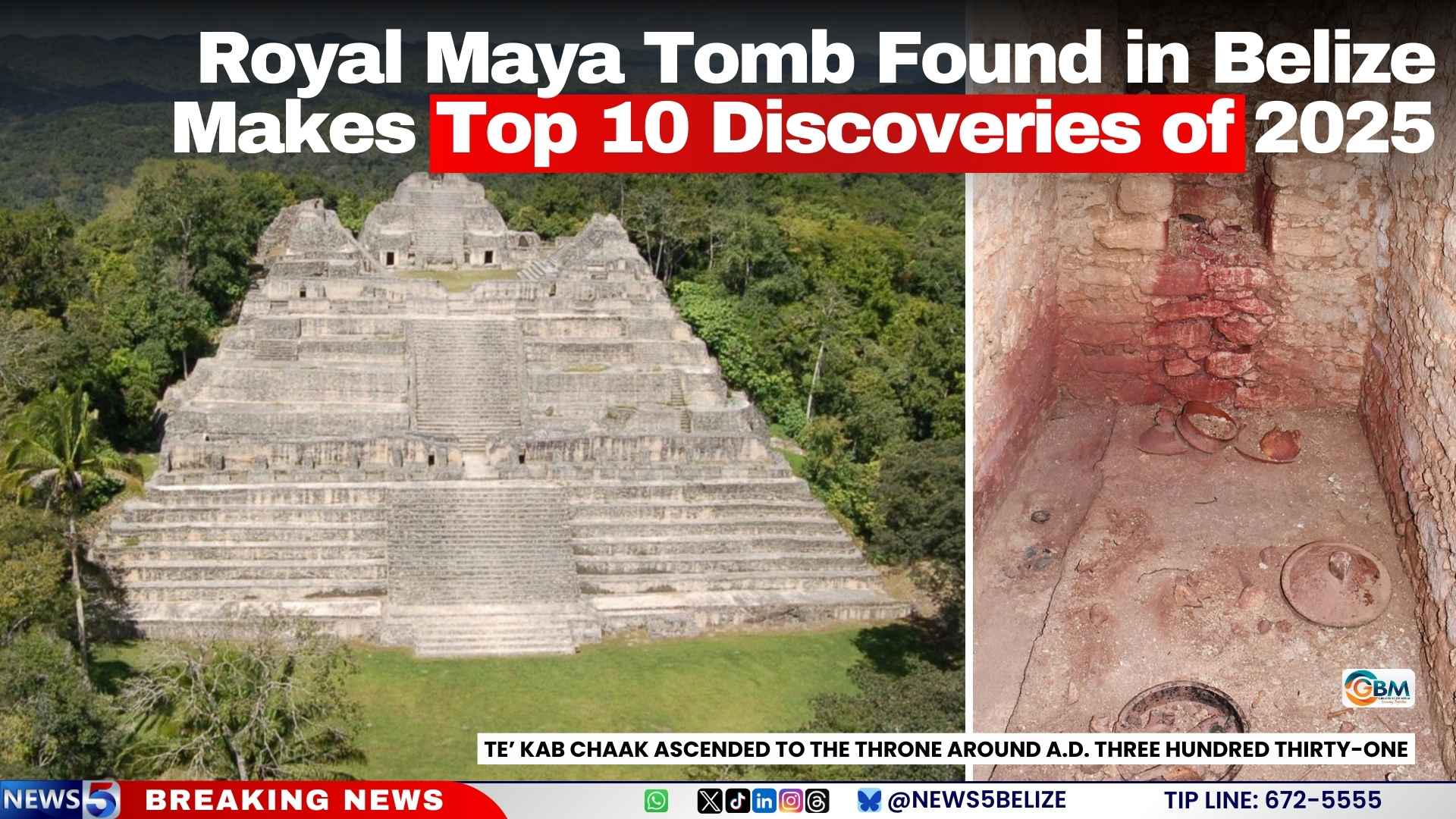
A monumental archaeological breakthrough in Belize has captured global attention after being honored among Archaeology Magazine’s Top 10 Discoveries of 2025. The prestigious recognition follows the unprecedented uncovering of a royal Maya tomb at the ancient city of Caracol, representing a watershed moment in Mesoamerican research.
After four decades of persistent excavation efforts, University of Houston archaeologists Dr. Arlen Chase and Dr. Diane Chase made what they characterize as a ‘once-in-a-lifetime’ discovery: the final resting place of Te’ Kab Chaak, the foundational ruler of Caracol’s royal lineage. This marks the first royal tomb ever identified at the site and stands as an extraordinary rarity in Maya archaeology, where direct correlations between human remains and historically documented figures remain exceptionally uncommon.
The discovery process began when researchers detected an anomalous void beneath previously excavated levels in an area initially explored in 1993. ‘We experienced a eureka-type moment when our measuring instrument failed to reach the bottom,’ recounted Dr. Arlen Chase, describing the pivotal instant that signaled something significant lay beneath.
Upon accessing the burial chamber, archaeologists revealed a seven-foot-high rectangular space adorned with red cinnabar pigment—a distinctive marker of elite status in Maya culture. The tomb contained an array of ceremonial offerings including intricately crafted pottery, jadeite ornaments, carved bone tubes, and other artifacts dating to Te’ Kab Chaak’s reign, which concluded approximately around A.D. 350. The most striking artifact emerged as a meticulously crafted death mask composed of jade and shell mosaic that once adorned the ruler’s face.
Dr. Diane Chase reflected on the discovery’s broader significance: ‘This remarkable find serves as both a testament to archaeology’s potential for sudden breakthroughs and a reminder of the immense patience the discipline demands. While this tomb remained concealed for over a millennium, our pursuit consumed more than forty years of dedicated investigation.’
Historical context indicates Te’ Kab Chaak ascended to power around A.D. 331, governing during Caracol’s formative development period long before it evolved into one of the Yucatán peninsula’s dominant Maya powers. The discovery provides unprecedented insights into early Maya rulership, burial practices, and the development of political dynasties in ancient Mesoamerica.