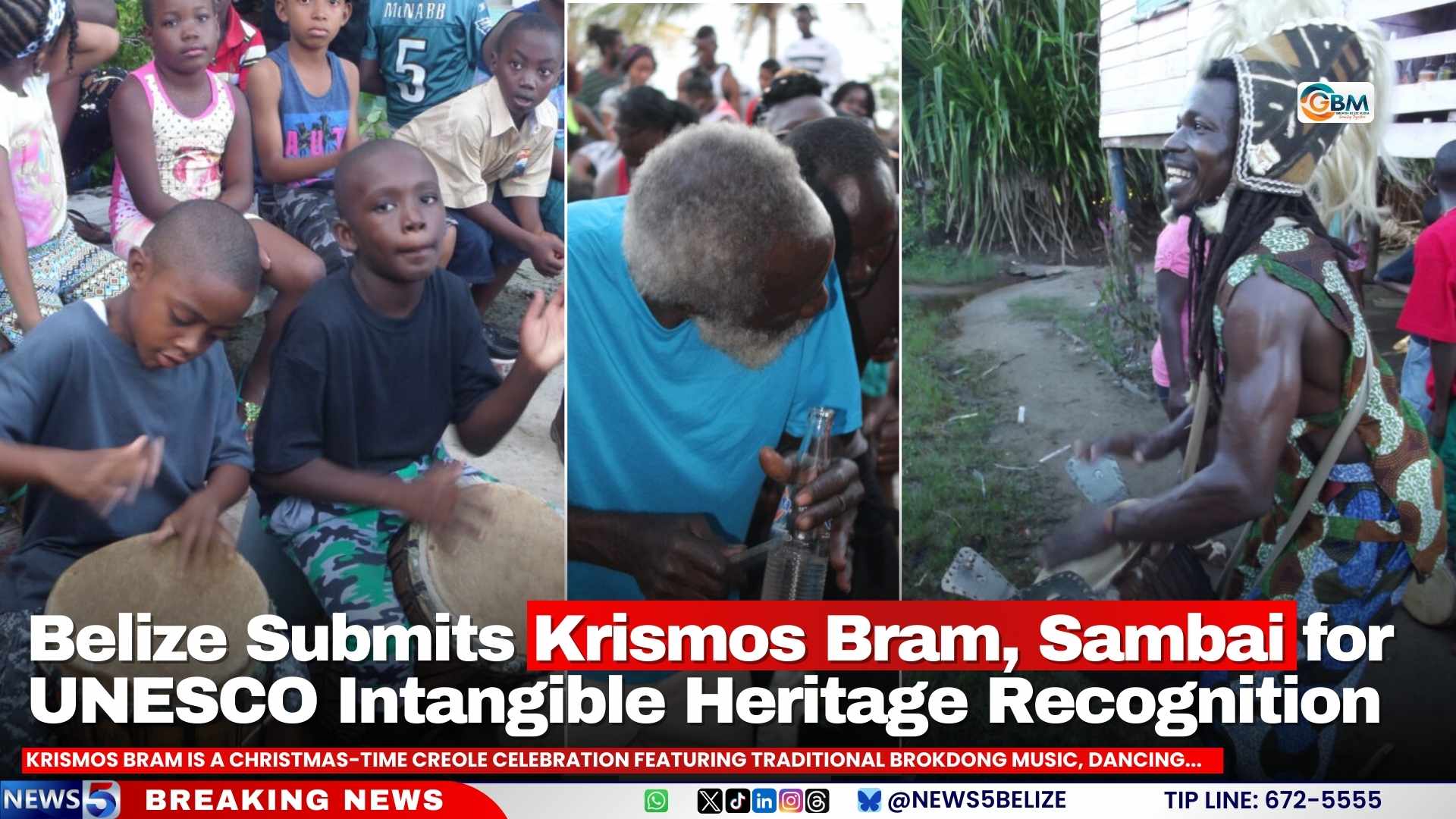
The Central American nation of Belize has formally presented its traditional Krismos Bram and Sambai celebrations for potential inclusion on UNESCO’s prestigious Representative List of the Intangible Cultural Heritage of Humanity. This significant cultural submission originates from Gales Point “Malanti” Village, a community renowned for preserving unique Creole traditions.
The nomination dossier will undergo rigorous evaluation during the upcoming 20th Session of UNESCO’s Intergovernmental Committee, scheduled to convene in New Delhi, India. A dedicated Belizean delegation comprising representatives from the Institute for Social and Cultural Research (ISCR-NICH), the National Kriol Council, and cultural custodians from Gales Point will advocate for the tradition’s international recognition.
Krismos Bram represents a vibrant Christmas-season celebration deeply embedded in Creole heritage, featuring distinctive Brokdong music, rhythmic drumming, traditional dancing, and communal house-to-house visits. The festivities commence with the resonant call of the Gombay or Sambai drum, summoning community members to participate. The celebrations typically extend throughout the evening, culminating in the Sambai—a ritual dance form that anthropological research suggests maintains connections to African courtship, harvest, and fertility customs.
Cultural preservationists attribute the remarkable continuity of Bram traditions in Gales Point to the village’s geographical isolation and robust cultural identity. Annually, both current residents and migrated community members return to their ancestral home during Christmas and Boxing Day to engage in the Bramming festivities.
Should UNESCO approve the nomination, Krismos Bram and Sambai would become Belize’s second cultural element inscribed on the Intangible Heritage list, following the precedent set by the Garifuna Language, Music and Dance recognition.