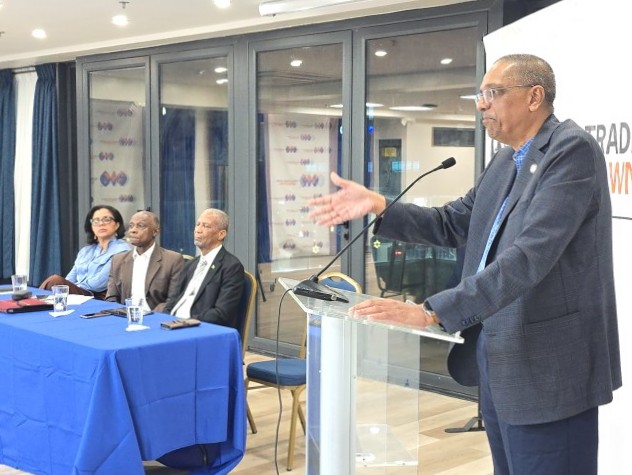
Georgetown, Guyana – Caribbean manufacturers are confronting significant structural obstacles to regional trade integration, with harmonization issues and protectionist policies undermining economic cooperation efforts. Ramsey Ali, President of the Caribbean Manufacturers’ Association (CMA), voiced these concerns during a recent trade forum organized by World Trade Centre Georgetown.
The absence of standardized food import regulations across CARICOM member states remains a persistent challenge. Ali highlighted how varying requirements force exporters to navigate disparate inspection protocols, creating unnecessary delays and increased operational costs. “The distinct different requirements, including the need for inspectors from intended buying countries, point to the absence of a common set of rules,” Ali stated, noting this non-tariff barrier has persisted for years without resolution.
A particularly contentious issue involves the Common External Tariff (CET) waiver process. Ali criticized member states for routinely blocking waiver requests despite demonstrated inability to supply certain products regionally. The objection process through CARICOM’s Council for Trade and Economic Development (COTED) proves excessively time-consuming and costly for businesses awaiting essential raw materials.
Furthermore, Ali accused several CARICOM governments of systematically violating CET provisions by permitting extra-regional imports without applying protective tariffs. This practice undermines local manufacturers who have invested substantially in production capabilities. “There are hundreds of pending court cases about that violation across the region,” revealed Ali, whose own company faces ten such legal challenges.
The debate revealed divergent perspectives on CARICOM’s institutional effectiveness. Former Guyana Foreign Minister Carl Greenidge defended the organization’s technical staff while acknowledging COTED’s limitations as “the least effective of all ministerial bodies.” Greenidge attributed implementation failures to member states prioritizing sovereignty over collective commitments.
Contrasting this view, CARICOM Single Market expert Neville Bissember maintained that the COTED mechanism provides adequate space for negotiating medium-to-long term exemptions, asserting that “the thing is working.” Belize’s High Commissioner to Guyana, Gale Miller-Garnett, emphasized the CET’s importance for protecting domestic industries and strengthening CARICOM’s external negotiating position.
The forum underscored the tension between regional integration aspirations and national economic interests, highlighting the urgent need for institutional reforms to facilitate smoother trade operations across the Caribbean community.